
Product Photos Without Models: On-Body Context With No Release
August 9, 2026 · 8 min read · by Aashirvad Kumar
Your credits refresh every month for as long as ListingRVA AI exists. No renewals, no annual increases, nothing to cancel.
Available on select plans. No renewals, ever.
August 9, 2026 · 8 min read · by Aashirvad Kumar
The listing looks fine until someone asks how big it is, or whether the strap sits at the hip or the waist, or how the necklace falls on a collarbone. You know a person in the frame would settle all of it in a second. You also know that a shoot with a model, a release and a half day of studio time costs more than the product's first month of margin. So you publish product photos without models and hope the dimensions in the bullets do the work, and they do not.
They do not because a buyer does not convert a measurement into a mental image. Fit, scale and use are judged visually or not at all. The good news is that there are five distinct ways to supply that information with nobody in the photograph, and one more that involves a person who does not exist. Each has a different cost and a different legal footprint.
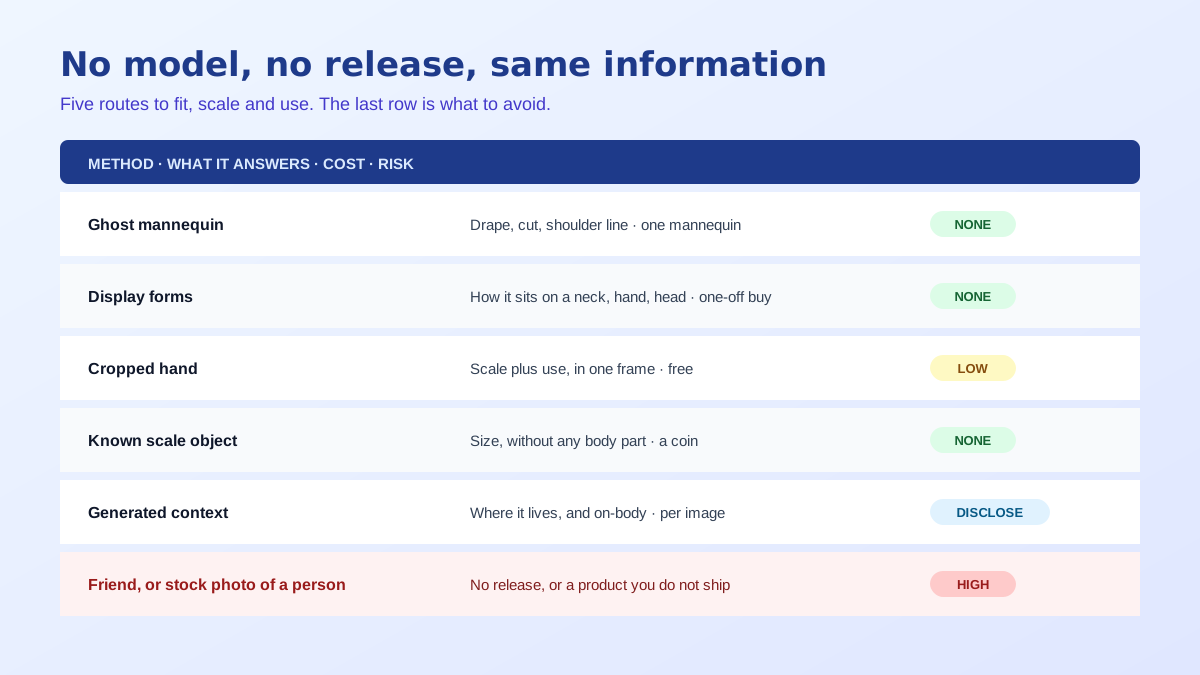
Most small sellers assume the obstacle is money, so they solve it by photographing a friend, a cousin or an employee. That solves the invoice and leaves the actual problem untouched. A model release is the document that grants you the right to use a person's likeness commercially, and an informal favour is not one. The listing outlives the goodwill: it keeps selling after someone changes their mind, leaves the company, or simply does not want their face attached to a brand two years later.
Stock imagery has the same trap wearing a different hat. A large share of stock licences restrict uses that imply the pictured person endorses a product, and a listing image is that implication by definition. There is also a straightforward commercial risk, because the item in the stock photo is not the item you ship, and any visible difference between the two is the raw material for a not-as-described claim. Both routes cost less than a proper shoot and buy you a liability instead of an asset.
For anything worn on the torso, this is the default. The garment is shot on a mannequin, usually twice, and the form is removed in editing with the inside of the collar or waistband composited back in from the second frame. What remains is a garment holding a body shape with nobody in it, which shows drape, cut, shoulder line and length: exactly the attributes a flat lay throws away. The technique is old, well documented, and needs a mannequin rather than a schedule. The full method is set out in this guide to clothing product photography.
The equivalent for non-apparel is a display form, and the range is wider than most sellers realise. A neck bust for necklaces, a hand form for rings and gloves, a head form for hats and headphones, a foot form for socks and insoles, a torso block for bags and harnesses. All of them are a one-off cost, none of them need booking, and every one of them photographs identically the next time you restock, which is what keeps a growing catalogue visually consistent.
The single highest-value cheap frame in this category is a cropped hand. A hand holding the jar, gripping the handle, fastening the clasp or pressing the button delivers scale and use simultaneously, and because the frame is tight there is no face, no outfit, no room and no styling to get wrong. It is also the frame most sellers skip, which is why so many listings for small objects leave buyers guessing whether an item is palm sized or forearm sized.
The practical notes are short. Use your own hand where you can, and get a release if it belongs to someone else, because likeness risk is lower with an unidentifiable hand but it is not zero. Keep the hand relaxed rather than gripping hard, since tension reads as awkwardness. Keep nails, jewellery and sleeves neutral so the frame does not date. And shoot the product in focus with the hand slightly softer, because the hand is a scale device, not the subject.
When there is no body part in the frame at all, scale has to come from an object the buyer can already measure by memory. A standard coin, a credit card, a mug, a phone, an A4 sheet, a tennis ball. This is why so many marketplace listings for small components include a coin, and it is a genuinely effective trick rather than an amateur one. Pair it with a dimension frame carrying the actual figures and you have covered both the intuitive and the precise version of the same question.
Two cautions. The primary image on Amazon and Flipkart must show the product alone on white with no props, so scale objects belong strictly in the secondary slots, a boundary the Amazon image requirements guide draws precisely. And pick a reference that is standard in your buyer's country, because a rupee coin means nothing to a shopper in Berlin and a dollar bill means nothing in Pune.
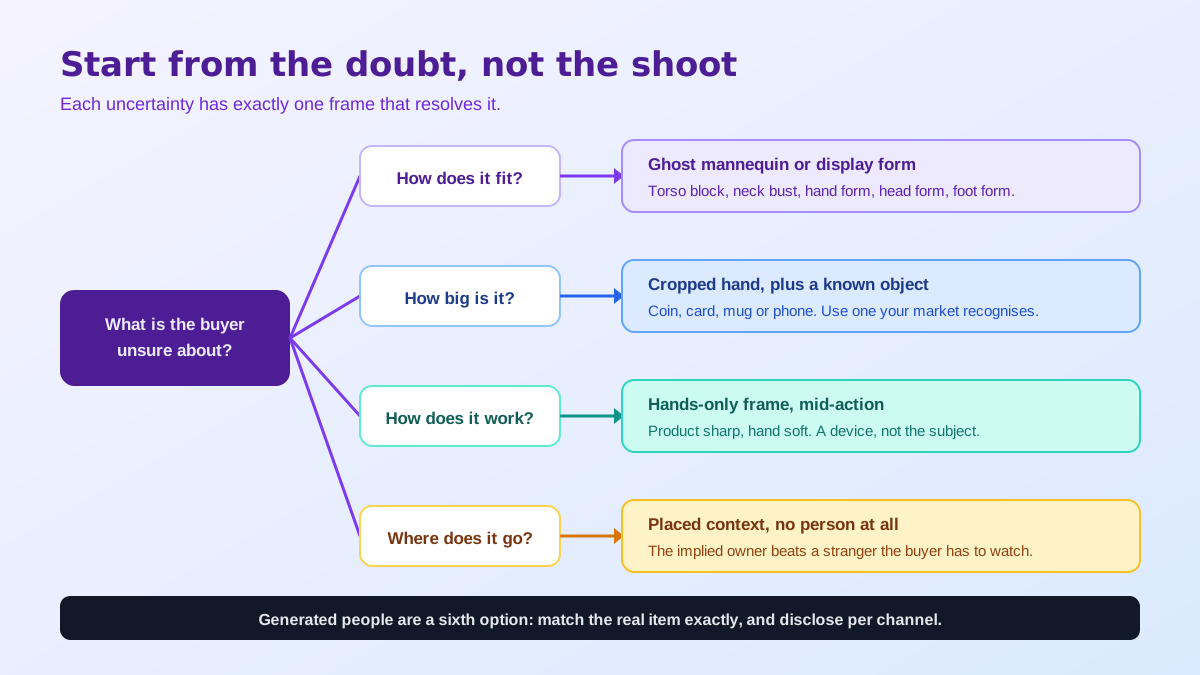
A large share of what buyers want from a lifestyle frame is not the human, it is the setting. A lamp on a bedside table with a book beside it tells you the height of the lamp, the warmth of the bulb and the kind of room it suits, and it does all three without anyone in shot. The same is true of cookware on a hob, a bag hanging on a chair back, or a tool resting on a workbench with the workpiece it just cut. The implied person is often more effective than a real one, because the buyer imagines themselves rather than watching a stranger.
This is also the cheapest category of frame to produce well, because the product is captured once on a plain surface and the environment is built around it afterwards. Cutting a clean subject out of the source capture is a one-step job with the free background remover tool, and the restaged versions inherit the lighting of the scene rather than the lighting of your kitchen. Producing an entire set of product photos without models is mostly a matter of choosing which rooms the product belongs in.
Generated on-body imagery removes the release problem, since there is no likeness to license, and it is now good enough for a wearing or holding frame in most categories. It brings two obligations in exchange. The first is accuracy: the generated garment must match the garment you ship in cut, colour and detail, or you have rebuilt the stock-photo mismatch problem with better tooling. The second is labelling, because marketplaces have been tightening their rules on disclosing synthetic imagery.
Those rules differ by channel and they are moving, so check the current position before you publish rather than after. Amazon's stance is covered in the disclosure rule breakdown linked above, and the handmade side of the market is stricter still, which the Etsy AI disclosure rules explain in detail. Used carefully, this sits alongside the other four methods rather than replacing them, and the broader workflow argument for AI product photography applies here more than anywhere: capture the real product properly, generate only the context.
Run down that list against your own carousel and the gap is usually one specific uncertainty rather than a general lack of glamour. Sellers reach for a model shoot because it feels like the complete answer, when in practice a mannequin, a hand and a placed context frame close most of the gap for a fraction of the cost and none of the paperwork. Building product photos without models is not a compromise you accept while you are small. For a lot of catalogues it is simply the better production model, and it stays that way at scale.
Yes, if the image is going on a commercial listing. A release is the document that grants you the right to use a person's likeness to sell something, and goodwill is not a substitute for it. The exposure is not theoretical either, because the friendship can end long after the photo is live and the listing keeps selling.
A ghost mannequin frame. The garment is photographed on a form, then the form is removed in editing and the inside of the collar or waistband is composited back in, so the piece holds a body shape with nobody in it. It shows drape and cut, it costs one mannequin, and it needs no release at all.
Usually not in the way you want to. Most stock licences restrict uses that imply the pictured person endorses a product, and a listing image is exactly that implication. It also creates a mismatch risk, because the item in the stock photo is not the item you ship, which is the sort of thing that generates not-as-described claims.
Practically, yes, and it is the highest value cheap shot in the category. A cropped hand holding, wearing or operating the product gives scale and use in one frame, and an unidentifiable hand carries far less likeness risk. Get a release anyway if the hand belongs to someone other than you.
Treat that as yes and check the current rules for each channel you sell on, because marketplaces have been tightening AI labelling requirements and they differ. The safer creative choice is also the compliant one: generated context that does not depict a person as if they were a real customer avoids most of the question entirely.
Then buy or borrow the form rather than the person. A torso block for tops, a neck bust for necklaces, a hand form for rings and gloves, a head form for hats and headphones, a foot form for socks. Forms are a one-off cost, they never need scheduling, and they photograph identically every time you restock.
ListingRVA AI now works inside Claude. Connect your workspace and ask Claude to generate listing copy and publish product images to your store, without leaving your editor. See the Claude connector →
Comments
No comments yet, be the first.
Leave a comment