
Footwear Product Photography: Consistent Angles Across a Size Run
June 28, 2026 · 8 min read · by Aashirvad Kumar
Your credits refresh every month for as long as ListingRVA AI exists. No renewals, no annual increases, nothing to cancel.
Available on select plans. No renewals, ever.
June 28, 2026 · 8 min read · by Aashirvad Kumar
Shoes are an angle problem. A buyer cannot try them on, so they judge fit, quality and style from the photos alone, and one view is never enough. They want the side profile, the top, the sole, the heel, the way the material catches the light. Miss an angle and you either lose the sale or earn a return. That is why footwear is one of the most shoot-heavy categories in ecommerce.
AI product photography turns that whole shoot into a single upload. You photograph the pair once, then generate a clean white-background hero, the full angle set, an on-foot lifestyle shot and every colorway in minutes, on a tool that preserves your real material and stitching instead of inventing a shoe that does not exist.

Two things make shoes their own problem. First, angles. A single hero sells the look but hides the build; buyers need the sole for grip and cushioning, the heel for support, the top for fit. The listing has to answer all of those before a buyer commits. Second, material truth. Footwear is bought on texture, the knit, the leather grain, the mesh, the sole stack. If an image flattens those, the shoe looks cheaper than it is and returns climb when the real pair arrives looking different. How large that effect is across categories is set out in the product image conversion statistics.
So a strong shoe image set does two jobs: it shows every angle a buyer needs, and it keeps the material honest while making it look its best.
A strong footwear listing is never one photo. It is a small set, each answering a different buyer question:
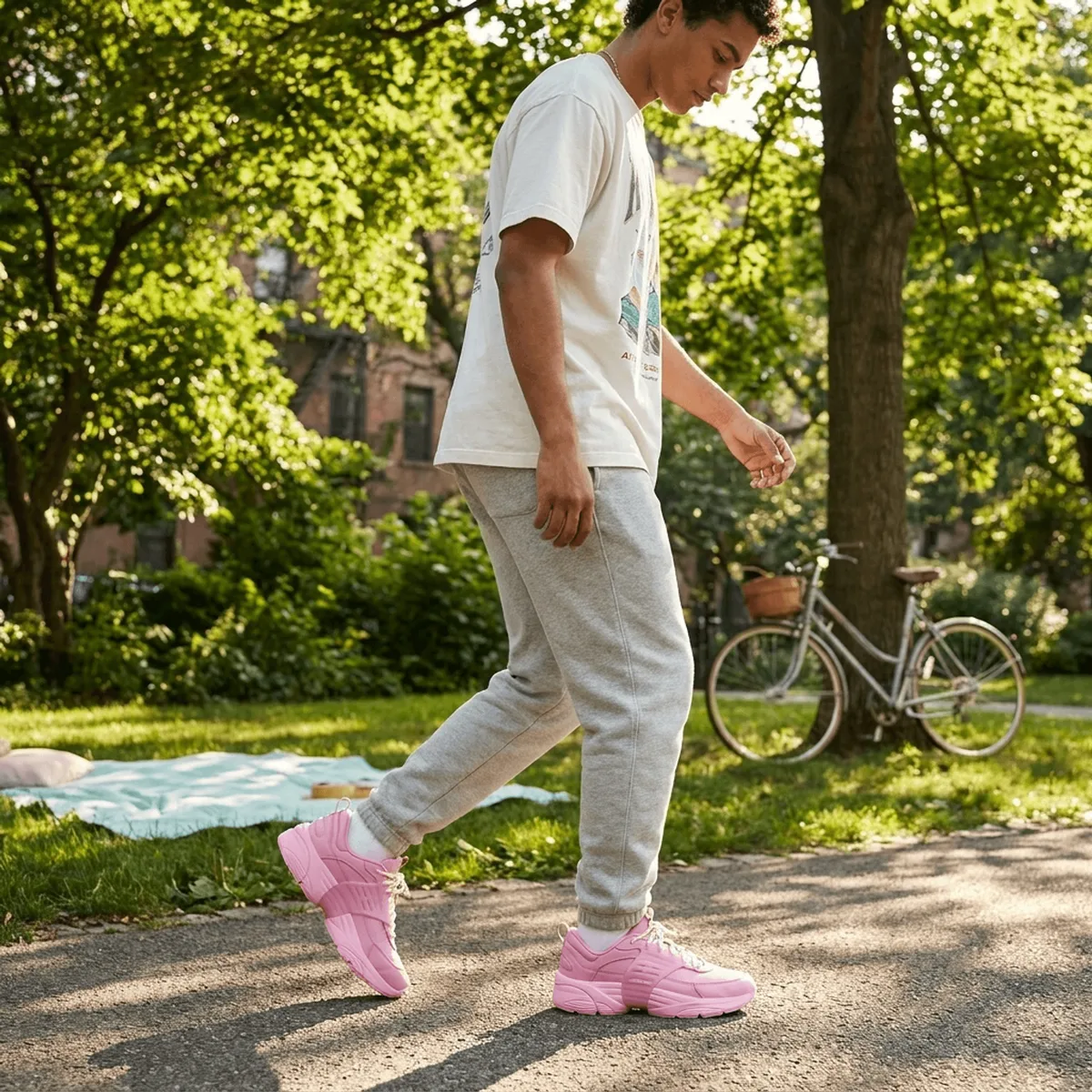
The traditional path to a footwear catalog is repetitive: place the pair on a sweep, light it, shoot each angle, then repeat for every colorway and every new style. For a brand with dozens of styles in several colors each, that is days of studio time and a five-figure budget before a single listing goes live. The image half of the same listing is covered by the Amazon product photography software.
The AI path starts from a single clear photo of each pair. From there you generate the white-background hero, the angle set, the detail crops, the lifestyle shot and the colorway range, and you keep them consistent across the whole line. When you add a colorway, you generate the variant rather than rebooking the studio. See AI Product Photography Pricing for the plan math, or the full AI Product Photography Software feature set. The equivalent rules on the other marketplace are collected in the Amazon image requirements guide, and they are not identical. See the full lineup on the AI footwear product photography page.
The fastest way to earn returns is an image that oversells. Keep these in mind so the picture matches the pair that arrives:
ListingRVA AI is built around this. It reads your real pair, preserves the material and never invents on-image text, so the catalog stays true to the product. You can publish the finished images straight to your channels through our ecommerce marketplace integrations.
Sizes rarely need their own photos. A size 6 and a size 11 of the same style look identical in a side profile, so one angle set per colorway can serve every size in that color. The exception is when the build actually changes across the run: a wide fit with a broader toe box, a kids' version with a different closure, or larger sizes that use a different sole unit. Those variants need their own images, because a buyer who orders the wide fit expects to see the wide fit.
The common mistake in a shared set is inconsistent orientation. One colorway shows the right shoe with the toe pointing left, the next shows the left shoe pointing right, and the grid looks like it came from different shoots. Pick one rule, such as the outer side of the right shoe with the toe facing left, and apply it to every hero in the line. Do the same with laces: tie every pair the same way before you photograph it.
50 free credits, no credit card. White background, angle set and lifestyle styles included.
Start free →Yes. The AI reads your real product photo and preserves the exact silhouette, material, stitching and colorway, then places the shoe on a clean background or in a lifestyle scene. Your real product stays the hero, never a generic stand-in.
A clean white-background hero of the side profile, a full angle set (side, top, three-quarter, sole and heel), a detail shot of the material and stitching, an on-foot or lifestyle image for context, and the full colorway lineup.
Footwear buyers want to see the side profile, the top, a three-quarter view, the sole and the heel. A five to six image angle set removes the guesswork that drives returns, and the side profile works best as the main image.
A studio shoot with a photographer and editing runs into the hundreds per pair, and every new colorway means booking it again. AI brings the full angle set and colorways to a few dollars per pair and minutes per product.
Yes. Generate a cohesive set across every colorway from one photo, shot at the same angles and lighting, so the whole range reads as one line instead of separate shoots.
ListingRVA AI now works inside Claude. Connect your workspace and ask Claude to generate listing copy and publish product images to your store, without leaving your editor. See the Claude connector →
Comments
No comments yet, be the first.
Leave a comment