
Social Media AI Images vs Ecommerce Listing Images: Why “More Images” Isn’t the Win
Jun 23, 2026 · 10 min read · by Aashirvad Kumar
Your credits refresh every month for as long as ListingRVA AI exists. No renewals, no annual increases, nothing to cancel.
Available on select plans. No renewals, ever.
Jun 23, 2026 · 10 min read · by Aashirvad Kumar
Almost every AI tool today claims the same thing: it can generate stunning product images for Amazon, Shopify and your store. And to be fair, the images often are stunning. The quality of AI image generation in 2026 is genuinely impressive.
But there is a question hiding underneath the demos that almost nobody asks: what is the real difference between social media AI images and ecommerce platform images? They are not the same job, and most tools quietly optimise for the first while marketing the second.
When a tool’s headline feature is “generate 50 images in one click,” that is a social media mindset. A feed is hungry for volume: you post, it scrolls away, you post again. A product listing is the opposite. A buyer makes one decision, in a grid full of competitors, under a platform’s strict rules. More images do not win that. The right images do. This article is about that difference, and about the part nobody likes to talk about: how the images are actually made and reviewed. How large that effect is across categories is set out in the product image conversion statistics.
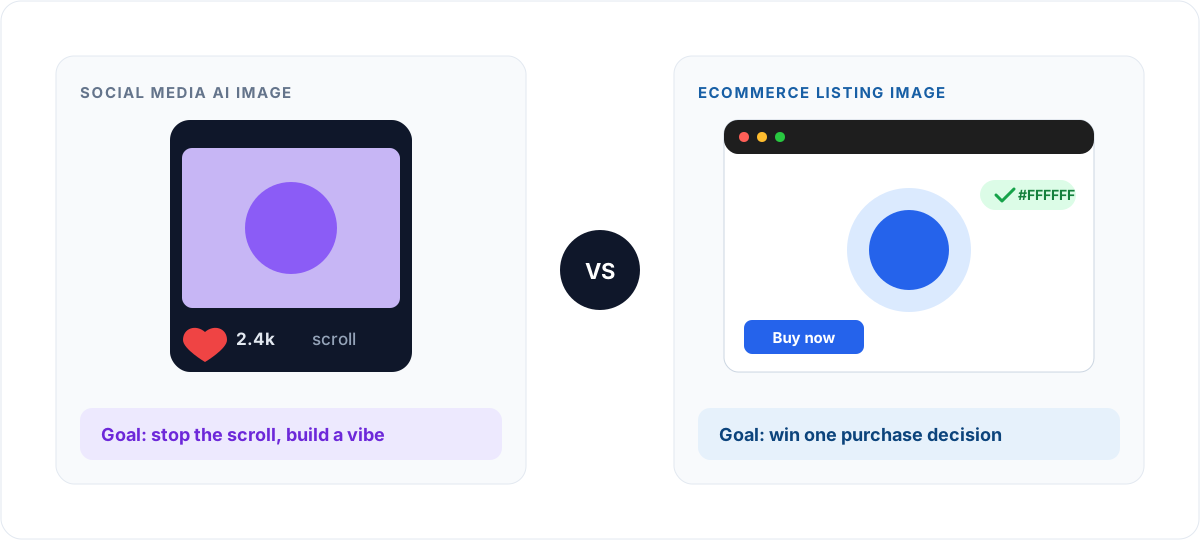
People treat social images versus listing images as a style question (moody vs clean, lifestyle vs white background). It goes deeper than that. They are optimised for different outcomes, judged by different people, against different rules.
| Social media AI image | Ecommerce listing image | |
|---|---|---|
| Goal | Stop the scroll, build a vibe | Win one purchase decision |
| Judged by | The algorithm and the feed | The buyer and the platform’s rules |
| Background | Anything that looks good | Often a required true #FFFFFF (Amazon main) |
| Text on image | Captions, hooks, anything | Restricted, and must be true, not invented |
| Accuracy | Optional (mood over literal) | Mandatory (the product must match reality) |
| Success metric | Reach, likes, saves | Conversion rate, returns, compliance |
| What “more” means | More posts = more reach | More wrong images = more risk |
Read that last row again. On social, volume is a feature. On a marketplace, an extra image that is slightly off (a near-white background that fails Amazon’s checker, an invented “100% organic” badge, a feature the product does not have) is not a bonus. It is a suppressed listing, a return, or a policy strike. Producing a compliant image set is its own job, handled by the Amazon product photography software.
Amazon’s main image needs a true white background (#FFFFFF, not the studio’s near-white #F5F5F5), the product filling about 85% of the frame, a minimum resolution, and no added text, logos or props. Flipkart applies similar Flipkart image framing rules to its main image. A beautiful lifestyle render that ignores these is a perfect social image and a rejected listing image. A tool that does not even know these rules exist will happily hand you images that get your listing taken down.
This is the one that separates a toy from a tool. On social, a generator inventing a sleek extra button or a “Best Seller” sticker is harmless flair. On a listing it is a false promise: the buyer orders, the product does not match, and you eat the return, the bad review, and possibly a policy violation for misleading content. The hard rule for ecommerce is simple. The AI must never invent text, claims, badges, brand names or features that are not real. Any on-image words have to come from you, the seller, not from the model’s imagination. The Amazon image requirements guide covers the same ground for Amazon, where a wrong main image gets the listing suppressed outright.
A social image gets a full-width moment. A listing image is a small thumbnail competing against a wall of rivals, then a zoom. It has to read instantly at small sizes, communicate the product in the first glance, and earn the click. “Pretty” is not the bar. “Clear and convincing in a crowded grid” is.
This is the honest part most demos skip. “Amazing quality” is easy to show in a hero shot. Whether a tool is built for platforms shows up in how it generates and constrains every image. Here is how we approach it with AI Product Photography built for ecommerce, not the feed:
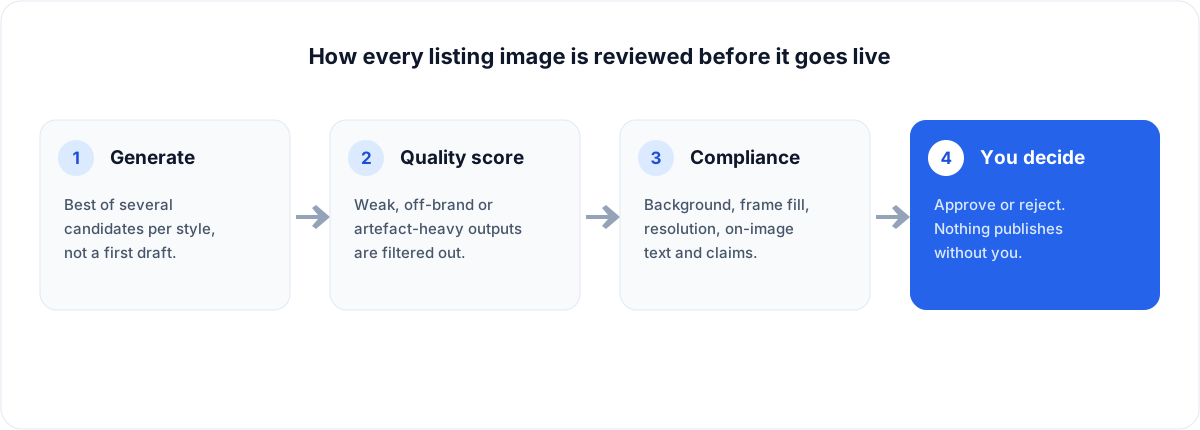
Generation is half the job. Review is what makes an image safe to put in front of a buyer. A platform-grade pipeline reviews at three layers:
That is the real difference. A social tool optimises for the number of images it can produce. A platform tool optimises for whether each image is compliant, accurate, and convincing enough to publish, and gives you the controls and the final say to make sure it is.
When you evaluate any “AI images for ecommerce” tool, stop counting images and ask the platform questions. Does it produce a true white background that passes Amazon’s checker? Will it ever invent text or features that are not real? Does it generate at the right spec and check its own output against the rules? And do you get to review and reject before anything goes live?
“More images” is a social media scoreboard. On Amazon, Shopify and Flipkart the scoreboard is conversion, returns and compliance, and those are won by images that are correct, not just abundant.
Social media AI images are made to stop the scroll, so style, mood and captions matter more than literal accuracy or platform rules. Ecommerce listing images have to be platform-compliant (correct background, frame fill and resolution), factually accurate, and built to convert inside a marketplace grid. The same generator can make both, but only one of them is safe to put on a live listing without changes.
Yes. Neither platform bans AI-generated images. The requirements are technical and factual: a true white main-image background and correct frame fill on Amazon, an accurate representation of the product, and no misleading claims or invented text. AI images that meet those rules are fully compliant.
Quality is necessary but not sufficient. A gorgeous image with a near-white (not true white) background still fails Amazon’s main-image rule, and a gorgeous image with an invented claim still creates a returns and policy problem. For listings, “correct” sits above “pretty.”
It is not a red flag for social content, where volume helps. For listings it usually means no per-platform compliance, no accuracy constraints, and no review step, so you are handed a pile of images and left to catch the non-compliant ones yourself. Fewer, filtered, reviewed images beat fifty unchecked ones.
A purpose-built pipeline generates several candidates per style, scores them for quality, checks them against platform rules (background, fill, on-image text and claims), and then puts every image in front of you to approve or reject before it is published. You stay the final reviewer.
Only if the tool is built to prevent it. The safeguards that matter are never inventing on-image text, badges or features, pulling any brand name only from your own product data, guarding sensitive claims, and a human approve or reject step before publishing. Those constraints are what make AI images safe for a marketplace rather than just a feed.
Upload one product photo. Get 20+ platform-ready styles you review and approve: true-white Amazon shots, lifestyle, infographics and more. 50 free credits, no credit card.
Start free →ListingRVA AI now works inside Claude. Connect your workspace and ask Claude to generate listing copy and publish product images to your store, without leaving your editor. See the Claude connector →
Comments
No comments yet, be the first.
Leave a comment