
Amazon's Synthetic Performer Rule: Labeling AI-Generated People in Listing Images
Aug 13, 2026 · 8 min read · by Aashirvad Kumar
Your credits refresh every month for as long as ListingRVA AI exists. No renewals, no annual increases, nothing to cancel.
Available on select plans. No renewals, ever.
Aug 13, 2026 · 8 min read · by Aashirvad Kumar
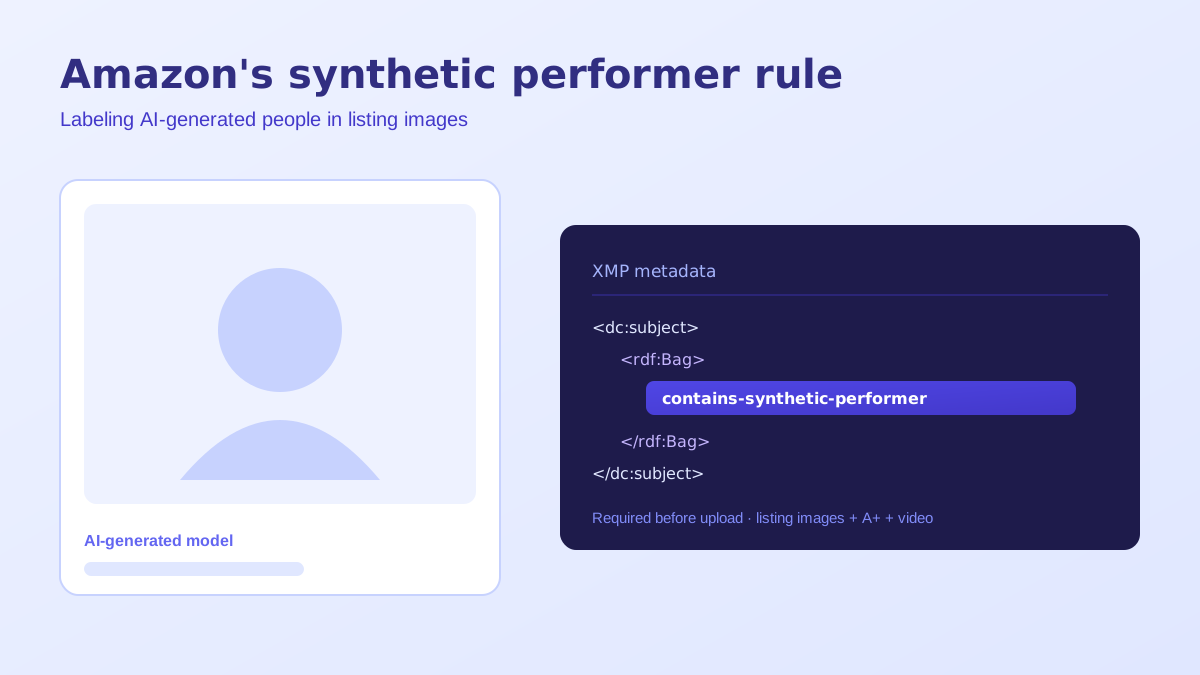
Amazon just drew a hard line under one specific kind of AI image. If a listing photo, an A+ module, or a video shows a person who was generated by AI rather than photographed, that file now has to say so, inside its own metadata, before you upload it. The label Amazon looks for is a synthetic performer tag, and the requirement is narrower and more technical than the general AI-disclosure guidance most sellers already know about.
This is not a soft nudge in a help page. It is a machine-readable flag Amazon can detect, and getting it wrong can suppress an image or flag a listing. The good news is that the rule is precise, which means compliance is precise too. Here is exactly what a synthetic performer is, the exact metadata field involved, what is in scope and what is safely exempt, and the one step that makes the whole thing a non-issue.
A synthetic performer is a photorealistic human being that does not exist, created entirely by an image model. Think of an AI-generated model holding your product, a generated hand demonstrating how it works, or a lifestyle scene where the person in the frame was never in front of a camera. Amazon's rule attaches to that specific thing: a realistic AI person. It is the digital equivalent of the on-screen actor disclosure that has arrived in advertising law, ported into the metadata of a product image.
Because the definition is tied to a realistic AI person, the boundaries are unusually clear. The rule is not about whether AI touched the image. It is about whether AI invented a human that a shopper might reasonably read as a real one.
This is the part that trips people up, because it is not a checkbox in Seller Central. The required keyword is contains-synthetic-performer, and it has to live inside the image file's XMP metadata, specifically in the dc:subject field. That is the standard IPTC Keywords field that professional photo tools have written for years. Amazon reads it straight out of the file when you upload, the same way it reads dimensions or color profile.
The catch is that this metadata is embedded in the file, not entered on a form. You cannot satisfy the rule by writing a note in a description or ticking a disclosure box. The bytes of the JPEG or PNG themselves have to carry the keyword. For a video, the same principle applies to the file's metadata track. If the tag is not physically in the file, as far as Amazon's systems are concerned, it is not there at all.
The timing is not random. The requirement operationalizes New York's synthetic performer advertising law, which took effect on June 9, 2026, and requires clear disclosure when a realistic digital replica of a performer is used in advertising. Amazon, as the surface where millions of listings and A+ pages act as advertising, translated that legal obligation into a technical one its pipeline can enforce at scale. A keyword in a metadata field is something a platform can check automatically on every single upload, which a human-read disclaimer never could be.
That framing matters for sellers, because it tells you the rule is here to stay and will be enforced by software, not goodwill. It is closer to an image-dimension requirement than to a best-practice suggestion.
The synthetic performer rule is deliberately narrow, and the exemptions are as important as the requirement. You need the tag when an image or video contains a photorealistic, fully AI-generated person. You do not need it in the cases below, and over-tagging them would be inaccurate.
So the rule catches one specific output: a realistic human the AI made up. Everything else in a normal product gallery is untouched. That is why blanket-tagging every AI image is the wrong move. It mislabels product shots and can wrongly signal a synthetic performer where none exists.
Amazon does not rely on the honor system here. Its image pipeline runs AI-detection that scores how likely an image is to be AI-generated, and a photorealistic AI person is exactly what that detection is tuned to notice. When the system sees a realistic AI human and the file carries no contains-synthetic-performer keyword, that mismatch is the problem. The likely outcomes are an AI indicator added to your listing, the image suppressed until it is corrected, or the listing flagged for review. Repeated mismatches are the kind of pattern that escalates to account-level attention, which no seller wants attached to their imagery.
The uncomfortable part for most sellers is that they would fail this check without doing anything wrong on purpose. Almost no image tool writes the contains-synthetic-performer keyword, so an AI-model image exported from a generic generator arrives at Amazon photorealistic, clearly AI to the detector, and completely unlabeled. The compliance gap is not in the seller's intent. It is in the export step, which is also where a quick listing quality check and an AI image artifacts review catch problems before Amazon does.
Compliance comes down to a single technical step performed at the moment the image is created: write the contains-synthetic-performer keyword into the XMP dc:subject field of any file that depicts an AI person, and only those files. Done correctly, the seller never touches metadata, never edits a header, and never guesses which images need it. The tool that generated the person is the tool that knows a synthetic performer is in the frame, so it is the right place to stamp the tag.
This is where the choice of software stops being cosmetic. A general-purpose image generator hands you a bare file and leaves the legal and platform obligation entirely on you. A tool built for Amazon selling can close the gap automatically, tagging model images at export and leaving product-only images alone, so every file lands upload-ready.
We built this into the pipeline so it is not something you have to remember. When you generate an AI-model image, the kind that places a realistic generated person with your product, our AI Product Photography writes the contains-synthetic-performer keyword into the file's XMP metadata as part of the export. Product-only styles, infographics and white-background shots are left untouched, because they contain no synthetic performer and must not be tagged. The result is that model images arrive at Amazon already carrying the flag the platform is looking for, with no metadata step on your side.
Say you sell a yoga mat. Your main image is a clean product shot on white, no person, so it needs no tag and gets none. For your gallery you generate two lifestyle images with an AI model mid-pose on the mat. Those two contain a synthetic performer, so each file is exported with contains-synthetic-performer in its XMP dc:subject. You also generate a feature infographic showing the mat's thickness and material, with no human in it, so that one stays untagged. Upload all four and Amazon's detector sees exactly what it expects: two realistic AI people, both declared, and two product graphics with no person and no false flag. Nothing gets suppressed, because nothing is mismatched.
The failure version is the same gallery exported from a tool that writes no metadata. The two model images are visibly AI to the detector and carry no synthetic performer keyword, so they trip the flag, and the seller finds out only when an image goes dark. Same pictures, same intent, different outcome, decided entirely by whether the tag was written at export.
The synthetic performer rule sits alongside, not on top of, Amazon's general AI-image disclosure guidance. Disclosure is the wide rule about substantially AI-generated imagery and honest representation of the product. The synthetic performer tag is a narrow, machine-readable requirement about one output: realistic AI humans. You can, and often will, be subject to both, a disclosed AI lifestyle scene that also happens to contain a generated model needs the tag as well. Treat them as two layers of the same principle, be honest about AI, and be specific where the platform asks you to be specific. Getting the images right is one piece of broader Amazon listing optimization.
The synthetic performer tag is written for you, only where it belongs. 50 free credits, no credit card.
Start free →A synthetic performer is a photorealistic person that was generated by AI rather than photographed. Amazon requires images and videos that depict one to carry a contains-synthetic-performer keyword in their metadata before they are uploaded to a listing or A+ content.
The keyword contains-synthetic-performer must appear in the image's XMP dc:subject field, which is the standard IPTC Keywords field. It is embedded inside the file itself, not typed into a Seller Central box.
No. It applies only to photorealistic AI-generated people. Product-only shots, packaging, infographics without a person, and non-photorealistic illustrations do not need the tag. AI-edited photos of a real person are also outside the rule.
Amazon runs AI-detection on uploaded images. An untagged photorealistic AI person can trigger the listing to be flagged, an AI indicator to be added, or the image to be suppressed until it is corrected, and repeat issues can escalate to account-level review.
The tag must be written into the file's XMP metadata, which most image tools do not do by default. A tool built for Amazon can embed it automatically on every AI-model image, so the file arrives upload-ready without any manual metadata editing.
ListingRVA AI now works inside Claude. Connect your workspace and ask Claude to generate listing copy and publish product images to your store, without leaving your editor. See the Claude connector →

Comments
No comments yet, be the first.
Leave a comment