
Garden Product Photography: Shooting for Weather and Scale
August 12, 2026 · 8 min read · by Aashirvad Kumar
Your credits refresh every month for as long as ListingRVA AI exists. No renewals, no annual increases, nothing to cancel.
Available on select plans. No renewals, ever.
August 12, 2026 · 8 min read · by Aashirvad Kumar
A bistro set on a white background is a shape. It could be a doll's house prop or it could seat two adults, and nothing in the frame tells a buyer which. It has never been rained on, it is not standing on anything, and the only durability claim available is whatever the bullet points say. That is the structural problem with garden product photography: the studio frame that every marketplace demands strips out precisely the two signals outdoor buyers use to decide.
Those signals are weather and size. Everything below is about putting them back into the image set without breaking the compliance frame that has to stay clean.
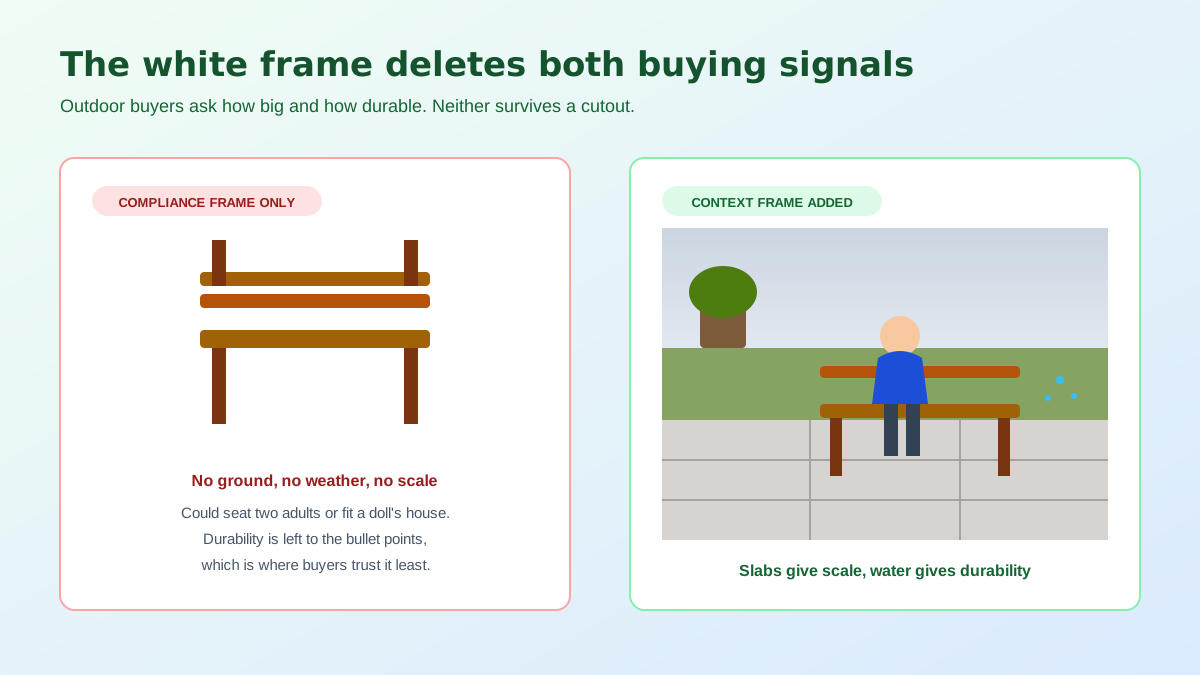
Outdoor purchases carry a risk that indoor ones do not. A lamp that turns out to be flimsy is annoying; a parasol base that cracks in the first frost is a hundred pounds thrown away and a heavy item to return. Buyers know this, so they read outdoor listings defensively, hunting for evidence of what the product will be like after a winter. A cutout on white contains no such evidence, and no amount of resolution adds any.
Size behaves the same way. Furniture, planters, arches, sheds and raised beds all photograph identically at any scale once you remove the ground and the surroundings. This is why the most common outdoor return reason is dimensional surprise rather than defect, and why the fix is compositional rather than technical. Good garden product photography puts something of known size into the frame and lets the buyer do the arithmetic without noticing they are doing it.
The instinct is to wait for a bright sunny day, and it is wrong. Direct midday sun is a small hard source directly overhead, which is the worst light available for a large object: it blows out the top surface of powder-coated metal, drops hard black bars under every slat of a bench, and pushes green foliage towards grey. Materials stop reading. A teak arm and an acacia arm look the same, and a woven poly rattan loses the texture that justifies its price.
Bright overcast is the ideal, because the entire sky becomes the softbox and a two metre object gets even illumination end to end. Failing that, shoot in the hour after sunrise or before sunset, when the light is low, warm and directional enough to describe texture. If you must shoot in hard sun, work in open shade with the sky as your source and put a large white sheet on the shadow side to lift it. The underlying principle is the same one that governs indoor work, laid out in the product photo lighting mistakes breakdown: source size beats source brightness every time.
One practical warning about real gardens. A lawn in August and a lawn in March are different products as far as the image is concerned, and mixing them across a set makes a range look assembled from stock. Pick one season and one time of day for the whole shoot, or at minimum for all frames of a single SKU, so the images read as one continuous scene.
Weather resistance is a claim in the copy and evidence in the images, and the evidence converts far better. The most efficient frame in the whole category is water: droplets beading on a cushion cover, rain sitting on a powder-coated frame without pooling into the joints, a wet tabletop with the grain still visible underneath. It takes a spray bottle and thirty seconds, and it communicates a treatment that would otherwise be an unverifiable sentence.
Then shoot the hardware. Buyers who have been burned before go straight to the fixings, so a tight frame of a stainless bolt, a welded joint, the underside of a foot or a drainage hole in a planter base answers the question they were about to ask in a customer message. Rust starts at fasteners and water collects at joints, and showing that you have thought about both is a stronger durability argument than any adjective.
Material close-ups matter more outdoors than in, because the price difference between an acacia bench and a teak one is invisible at listing thumbnail size and enormous at the checkout. Shoot the grain with raking light, close enough that the pores are visible. The same logic applies to rattan weave, powder coat texture and galvanised finish, and the general shot-list structure in the product photography angles guide maps neatly onto outdoor sets.
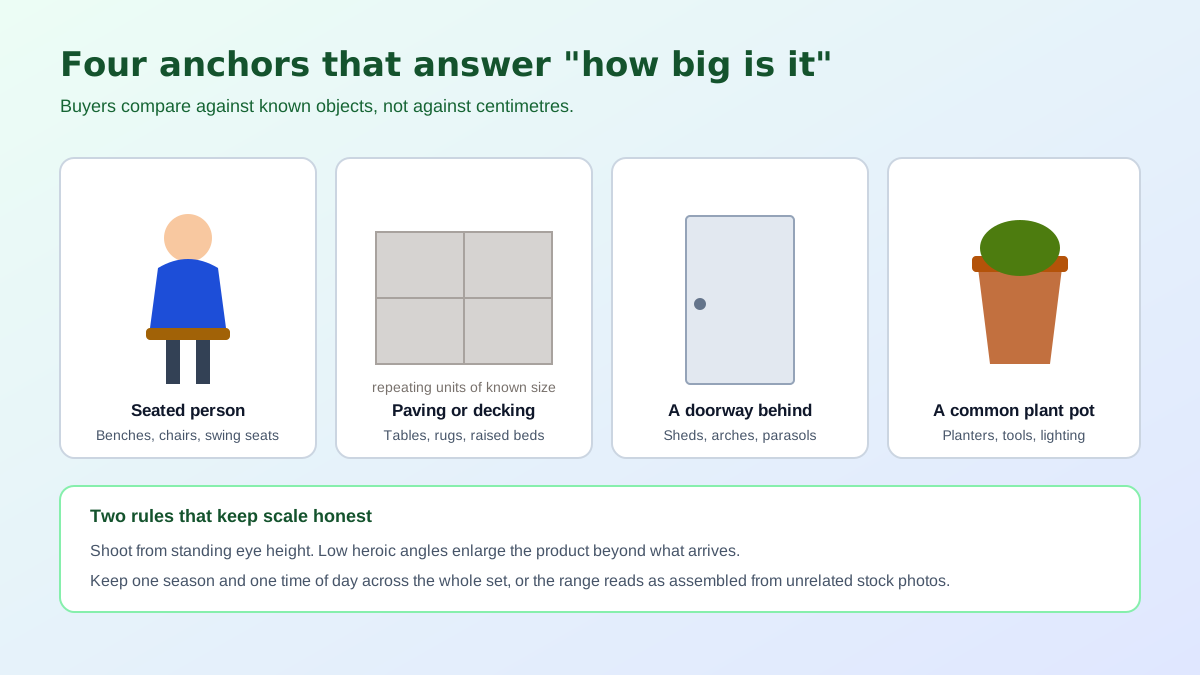
A dimensions graphic is useful and insufficient. People do not convert 120 by 60 centimetres into a mental picture of their patio, they compare against objects they already know. So put those objects in the frame: a person seated on the bench, a standard patio slab under the table legs, a doorway behind the shed, a familiar terracotta pot beside the planter. One frame with a human in it removes more dimensional returns than three frames of measurement overlays.
Use the ground itself as a ruler. Decking boards, paving slabs and brick courses are all repeating units of known size, and a buyer standing in their own garden reads them without instruction. Shoot from a normal standing eye height rather than from a low heroic angle, because low angles enlarge the subject and are the fastest way to create an expectation the delivery will not meet. Honest perspective is a returns strategy, not just an aesthetic preference.
Certain subcategories need a paired frame rather than a scale cue. Solar lights need a daylight shot of the physical object and a dusk shot of the actual output, from the same position, because brightness and colour temperature are the only real differentiators. Planters need an empty frame that shows what ships and a planted frame that shows proportion. Covers need on and off. Anything that changes state needs both states, and the plain description of which is which belongs in the copy, where an AI product description generator keeps the wording consistent across a range.
Real outdoor shoots are hostage to weather, daylight and a garden you may not have. Getting eight SKUs photographed in matching conditions can take weeks of waiting for the right sky, and the reshoot cost when a range refreshes is brutal. This is the strongest practical case for AI product photography in the category: the product itself is photographed once, honestly, and the garden around it is generated in whatever season and light the listing needs.
The boundary is worth stating plainly. Generate the setting, never the specification. The slat count, the fixings, the finish and the proportions have to be the real ones, because those are what the buyer is judging, and an invented detail in an outdoor image is a product accuracy problem rather than a styling choice. Keep the white compliance frame photographic, keep the durability macros photographic, and let generation handle the patio, the planting and the evening light. Handled that way, garden product photography stops depending on a fortnight of good weather, and the specification side stays governed by the Amazon product image requirements.
Because the two questions outdoor buyers ask, will it survive a winter and how big is it really, are both answered by context. A bench floating on white has no ground under it, no plants beside it and no weather on it, so the buyer has nothing to measure or judge against. The white frame is still required as the main image, it just cannot be the only one.
Bright overcast, or the hour after sunrise and before sunset. Midday sun is a small hard source overhead, so it burns highlights on powder-coated metal, drops black shadows under every slat and makes green foliage go grey. An overcast sky is an enormous softbox and gives you even material colour across a large object.
Show the evidence rather than claiming it. Water beading on a cushion cover, droplets sitting on a powder-coated frame, a close-up of stainless fixings, visible drainage holes in a planter base and a tight shot of the joint where water would collect all read as durability. One macro frame of the hardware often does more than a paragraph of copy.
Put a known object in the frame. A standard patio slab, a person seated on the bench, a door behind it or a common plant pot beside it settles scale instantly. Dimension callouts on a clean frame are useful as a secondary image, but a human in the scene is what stops the return that begins with the phrase much smaller than expected.
Both, and label them clearly. The white background frame must show exactly what ships, which is an empty pot, because a planted image as the main asset implies the plant is included. The planted version belongs later in the set, where it does the job of showing proportion and what the product is for.
They need a pair. A daylight frame shows the physical object, the stake, the finish and the size, which is what arrives in the box. A dusk or night frame shows the actual output, colour temperature and spread, which is the only thing that distinguishes one solar light from another. Shoot both from the same position so buyers can read them as one product.
ListingRVA AI now works inside Claude. Connect your workspace and ask Claude to generate listing copy and publish product images to your store, without leaving your editor. See the Claude connector →
Comments
No comments yet, be the first.
Leave a comment