
Flipkart vs Amazon for Sellers: Where to Put Listing Effort First
August 19, 2026 · 8 min read · by Aashirvad Kumar
Your credits refresh every month for as long as ListingRVA AI exists. No renewals, no annual increases, nothing to cancel.
Available on select plans. No renewals, ever.
August 19, 2026 · 8 min read · by Aashirvad Kumar
You have both accounts open, the same forty SKUs, and roughly two weeks of your own time before the next stock lot lands. The question is not which marketplace is better in the abstract. It is which listing work, on which platform, returns something this month. Most comparisons of flipkart vs amazon for sellers answer a different question entirely, comparing commission slabs and fulfilment fees, and then leave you to guess where the effort goes.
Effort allocation matters more than platform choice, because a seller with limited hours can genuinely finish one platform properly or half-finish two. The useful distinction is that the two marketplaces gate a listing at different points, so the first hour of work buys a completely different outcome on each.
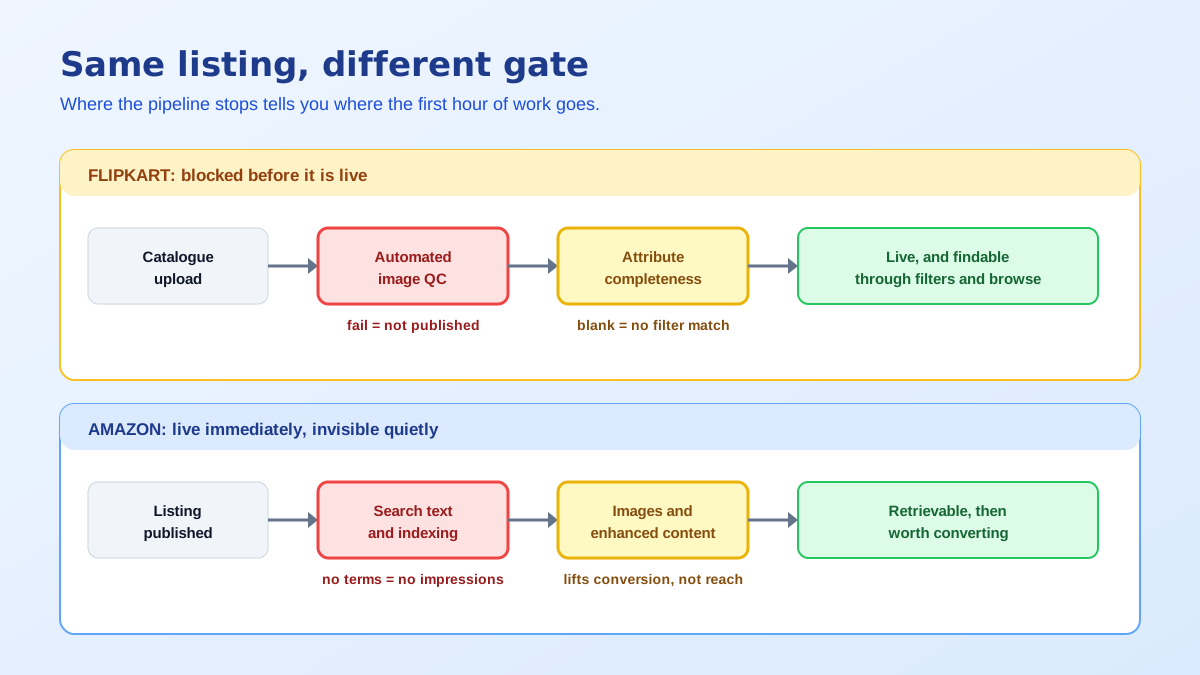
On Flipkart the first gate is mechanical. Imagery is checked automatically against the platform's specification before a listing can go live, and a frame that fails is not merely a weak frame, it is a blocked one. Sellers routinely lose days here without realising it, because a catalogue upload appears to have succeeded while individual SKUs sit unpublished waiting on an image that never passed. The requirements and the common failure reasons are set out in this walkthrough of the Flipkart image QC gate.
On Amazon the first gate is textual. A listing goes live easily, then quietly fails to appear for the searches you assumed it would cover, because the title, the bullets and the backend search terms did not contain the words buyers type. Nothing about the page looks broken. The product simply is not retrievable, and no amount of photography rescues a listing that is never shown. That specific failure is diagnosed in this guide to Amazon backend keywords indexing.
The deeper difference is architectural. Flipkart's catalogue is strongly template driven: each vertical has a defined attribute set, and the browse pages, filters and comparison surfaces are assembled from those fields. A buyer narrowing down by size, material, capacity or compatibility is filtering on your attribute values, not reading your prose. Leaving fields blank does not make the listing look sparse, it makes the listing invisible to a whole class of shoppers who never see an unfiltered results page.
Amazon is more of a language machine. Its retrieval starts from text you supply and text buyers type, and the surfaces that matter most, the search results page and the bullets, are written rather than structured. Attributes still matter, but the marginal hour spent on a well researched title beats the marginal hour spent completing an optional field. Getting that ordering right is the single biggest practical takeaway in flipkart vs amazon for sellers who are working alone.
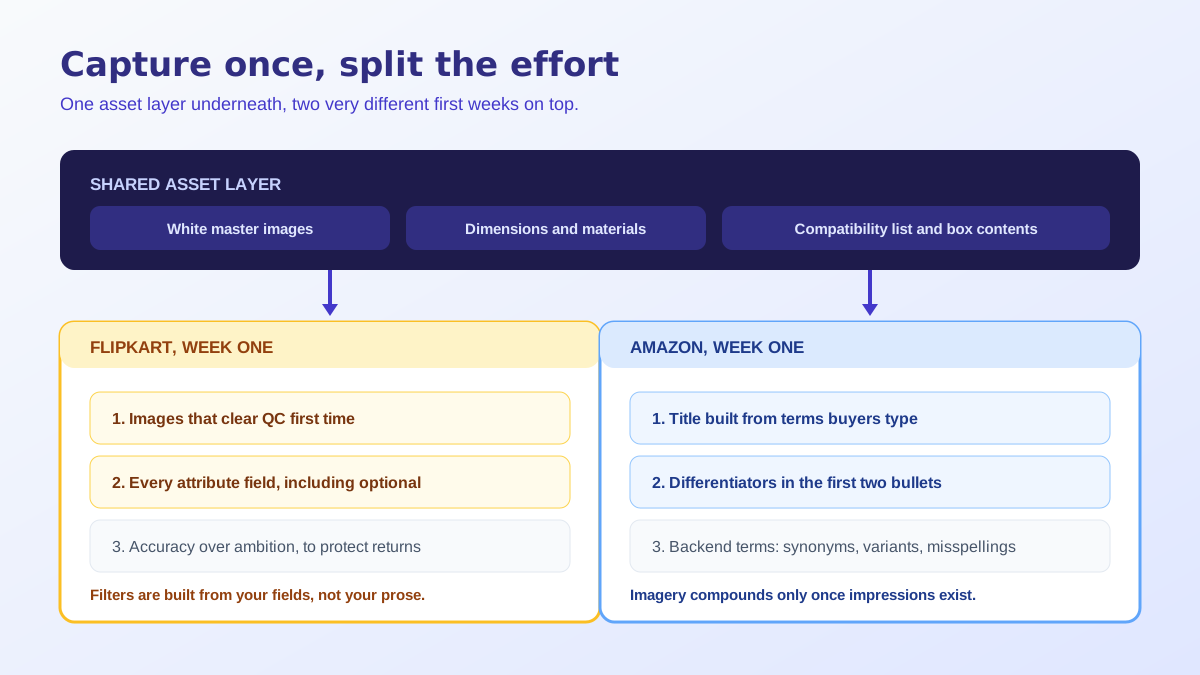
On Flipkart, spend it on images and attributes. Produce a master set that clears the automated check on the first attempt, since every rejection costs a resubmission cycle rather than a quick edit. Then work through the category template field by field, including the ones marked optional, and be accurate rather than aspirational, because incorrect attribute values generate returns that then damage the account metrics you need for badges and better placement.
On Amazon, spend it on search text and then on conversion. Build the title from terms buyers actually use rather than the terms on your invoice, put the differentiators in the first two bullets where mobile truncates, and load the backend fields with the variants, synonyms and misspellings that do not fit naturally in visible copy. Only after the listing is getting impressions does image and enhanced content work start compounding, which is the sequence set out in this Amazon listing optimization playbook.
The good news for a small seller is that the expensive asset transfers cleanly. Both marketplaces require a primary image showing the product alone on a plain white background with no text, borders, watermarks or props, so a single clean master capture satisfies both gates at once. Shoot generously large, keep the raw files, and crop per channel rather than reshooting. The rest of the carousel differs in slot count and in what enhanced modules will accept, but the underlying photography does not.
Product facts transfer too, even though their presentation does not. The same dimensions, materials, compatibility list and box contents feed an Amazon bullet, a Flipkart attribute field and a spec image, and maintaining them once in a structured form is what makes multi-channel selling survivable. Generating both versions from one product record is exactly what the Flipkart listing generator tool is built for, and the imagery side follows the same principle: capture once, then restage per channel with AI product photography rather than booking a second shoot.
The common failure pattern is not choosing wrongly, it is choosing both and doing neither properly. Forty half-built listings across two marketplaces perform worse than twenty finished ones on a single marketplace, because both platforms reward depth on a listing with better placement and both punish thin listings by simply not showing them. Half-built also compounds badly: weak listings generate returns, returns damage account health, and damaged account health suppresses the listings you later fix.
A more realistic plan is sequential. Finish one platform to a standard you would be happy to advertise against, run enough traffic to learn which of your SKUs actually sell, then port only those winners to the second marketplace. The porting step is fast precisely because the images and the product facts already exist. Anyone weighing flipkart vs amazon for sellers should treat the second platform as a duplication exercise on proven winners rather than a second launch.
Cost is the comparison every seller starts with and the one that is hardest to answer in the abstract, because both marketplaces publish category-wise rate cards rather than a single flat commission. The only reliable method is to model one real SKU end to end on each platform: the referral or commission percentage for that specific vertical, the fixed or closing fee per order, the shipping charge for the weight slab you actually ship in, the payment collection fee, and the handling cost when a buyer sends the item back. Do that exercise for your cheapest SKU and your most expensive one and the answer often flips between them, because per-order fixed components eat a low-priced item alive while percentage components dominate at higher price points. A seller who chooses on headline commission alone tends to discover months later that the low-value half of the catalogue was quietly loss-making at volume.
Cash flow is the second surprise, and it rarely appears in comparison tables at all. Both platforms settle on a cycle rather than per order, and the cycle you get is tied to the fulfilment model you sign up for, so a seller holding stock in a marketplace warehouse is financing inventory, storage and a settlement lag simultaneously. That interacts directly with the badges. F-Assured on Flipkart and Prime on Amazon both depend on fulfilment choices, and both visibly change how a listing performs against unbadged competition on the same results page, which means the badge stops being optional the moment your rivals carry it. Anyone weighing flipkart vs amazon for sellers has to include how much working capital each fulfilment route ties up, not only what it costs per unit, because the platform that looks cheaper per order can be the one that leaves you unable to reorder in time.
None of those questions is about which company is nicer to sell on, and that is deliberate. Both are large, both are demanding, and both will take a percentage. What you control is where the next twenty hours go, and the honest answer is usually images and attributes on one platform, search text on the other, and a shared asset library underneath both. The seller economics of a marketplace versus your own storefront is a separate calculation, worked through in this look at the cost of Amazon vs Shopify.
Start on whichever one your category's buyers already use, then treat the second as a copy exercise rather than a fresh launch. What matters more than the platform choice is that you do not split a small catalogue budget across two marketplaces at once, because both reward depth on a few listings far more than breadth across many.
Images and attributes, in that order. Flipkart runs an automated quality check on imagery before a listing goes live, so a failed image is a blocked listing rather than a weak one. After that, fill every attribute in the category template, because Flipkart's filters and browse pages are built from those fields.
Search text. Title, bullets and backend search terms decide whether the listing is retrievable at all, and no amount of image work rescues a product that never appears in results. Once it is indexing and getting impressions, move to imagery and enhanced content to lift the conversion rate on the traffic you already have.
Largely yes, and you should. Both require a primary image of the product alone on a plain white background with no text, borders or props, so one clean master set satisfies both. Secondary slots differ in count and in what enhanced modules accept, so plan the master capture at a generous resolution and crop down per channel.
It is worth it wherever you qualify, but it is not the first thing to build. Enhanced content lifts conversion on visitors who already reached the page, so it compounds only after the listing is retrievable and the primary images are doing their job. Build it once the traffic exists, not before.
You need the same facts arranged differently. Amazon rewards a keyword-dense title and bullets written for a search box. Flipkart leans on structured attribute fields that populate filters, so effort that goes into prose on Amazon goes into completeness and accuracy of the attribute set on Flipkart.
ListingRVA AI now works inside Claude. Connect your workspace and ask Claude to generate listing copy and publish product images to your store, without leaving your editor. See the Claude connector →
Comments
No comments yet, be the first.
Leave a comment