
The Real Cost of Selling on Amazon vs Shopify (After Fees, FBA, PPC)
July 2, 2026 · 9 min read · by Aashirvad Kumar
Your credits refresh every month for as long as ListingRVA AI exists. No renewals, no annual increases, nothing to cancel.
Available on select plans. No renewals, ever.
July 2, 2026 · 9 min read · by Aashirvad Kumar
The question sellers actually argue about is not "which platform is better", it is "why am I working this hard and keeping so little". The referral fee on your Amazon dashboard is the tip of the iceberg. Add FBA, add the advertising you now need just to stay visible, and the real cost of Amazon looks very different from the 15 percent everyone quotes. This is the honest math, and what it means for whether you should keep leaning on Amazon or shift weight to Shopify. The real Amazon vs Shopify decision is about margin, not preference.
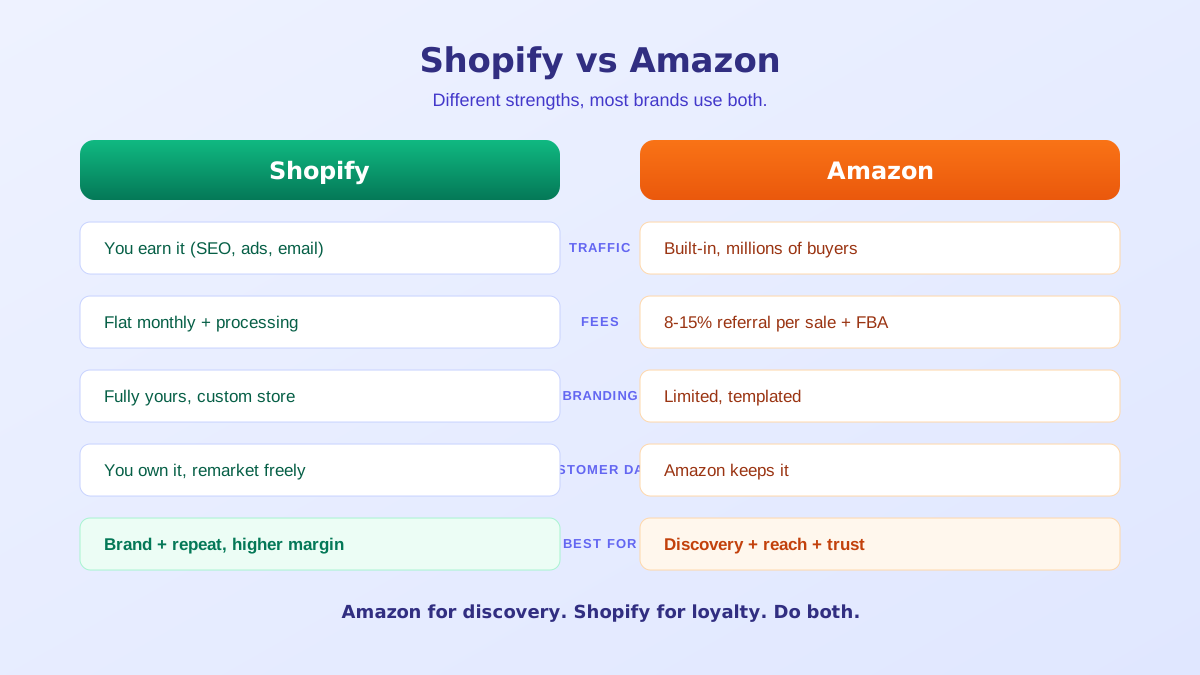
The referral fee, commonly 8 to 15 percent, is what sellers quote. But that is not what Amazon actually costs. Take a typical $75 product sold through FBA:
Stack those and Amazon's total take rate lands around 30 to 40 percent of revenue, not 15. That is the gap between the fee sellers plan for and the cost they actually bear. It is also why even efficient Amazon sellers frequently keep only 10 to 20 percent profit before their own overhead, and why the "my sales are up but my bank balance isn't" feeling is so common. Amazon draws those lines in different places, which the Amazon image requirements guide spells out field by field.
The number that matters: not the referral fee, but the all-in take rate, referral plus FBA plus the ad spend you cannot avoid. On Amazon that is routinely 30 to 40 percent. Compare platforms on that number, not the sticker fee.
Shopify flips the model. There is no per-sale referral commission on your own store. You pay a flat monthly plan and about 2.9 percent plus a small fixed fee for payment processing. On that same $75 order, processing is roughly $2.50. That is why Shopify sellers commonly retain 30 to 40 percent margins on comparable products, the platform is not taking a third of every sale. If the argument needs evidence, the product image conversion statistics cover what actually shifts buyer behaviour.
But Shopify hands you no traffic. Nobody lands on your store by accident. So you must add your customer acquisition cost, and through paid ads that is often $8 to $15 per sale, sometimes more in competitive niches. Shopify is genuinely cheaper only if you can bring customers in for less than Amazon's all-in take. If your acquisition cost rivals Amazon's fees, the margin advantage narrows fast.
| On a $75 order | Amazon (FBA) | Shopify |
|---|---|---|
| Platform / referral | ~$11 referral | Flat monthly plan |
| Fulfillment | $6-$9 FBA | Your own / 3PL |
| Payment processing | Included in fees | ~$2.50 (2.9% + fixed) |
| Getting the customer | $8-$22 PPC (built into rank) | $8-$15 CAC (ads/SEO/email) |
| All-in take rate | ~30-40% of revenue | Processing + your CAC |
| Who owns the customer | Amazon | You |
The table makes the real trade-off obvious: Amazon bundles traffic into its take rate, so you pay for customers whether you notice it or not. Shopify unbundles it, so your economics live or die on how cheaply you can acquire, and how much repeat business you earn from customers you now own. The Shopify product image size guide covers the pixel numbers that decide whether zoom works on a Shopify theme.
And there is a cost the table cannot show: on Amazon you rent the customer once. You do not get their email, you cannot retarget them, and you cannot bring them back without paying Amazon again. That invisible cost compounds. A customer worth one $75 order on Amazon might be worth three or four orders over a year on Shopify, because you can email them, launch to them, and build loyalty, none of which Amazon lets you do. So the honest comparison is not just fee versus fee on a single sale, it is a single taxed transaction versus an owned relationship with a lifetime of margin. That is the real reason margin-focused brands fight to move repeat demand off Amazon.
The mistake is treating this as a switch. It is a routing decision, send each type of demand to the channel that keeps the most margin:
This is why most durable brands in 2026 do not choose, they run both: Amazon stimulates discovery and the first purchase, Shopify converts repeat customers and accrues brand equity and data over time. The honest answer to Amazon vs Shopify is not a platform, it is a routing rule, and the all-in take rate tells you which sales belong on which channel. The image half of the same listing is covered by the Amazon product photography software.
You do not have to decide platform-wide, decide per product. For any SKU, ask three questions:
Score each product on those three and the routing becomes obvious: high-repeat, high-ACoS, self-generatable demand goes to Shopify; low-repeat, cold-search, discovery-dependent demand stays on Amazon. Most catalogs end up split, which is exactly why the "run both" answer wins, not as a compromise, but because different products have different economics. Writing that copy across a catalogue is the real bottleneck, which the Shopify product description generator removes.
Running both means maintaining listings and images across both, and the rules differ. Amazon enforces strict main-image rules, pure white background, product filling roughly 85 percent of the frame, no text or props, while Shopify rewards rich lifestyle and branded imagery. You need compliant white-background mains for Amazon and warmer lifestyle and infographic images for Shopify, for the same products, or each channel underperforms.
That is the exact problem ListingRVA AI solves. From one product photo, generate AI product photography for both channels, Amazon-compliant mains plus Shopify-ready lifestyle and infographic images, write channel-optimized copy, and publish to both through our marketplace integrations. Go deeper on each side in diagnosing Amazon rank and Shopify SEO.
50 free credits, no credit card. Channel-ready images and copy from one product photo.
Start free →On a typical product, the referral fee (around 8 to 15 percent) plus FBA can total $17 to $20 on a $75 item, and once you add PPC of 10 to 30 percent of revenue, Amazon's total take rate commonly reaches 30 to 40 percent. That is why efficient Amazon sellers often keep only 10 to 20 percent profit before other costs.
Per order, usually yes, Shopify charges a flat plan plus about 2.9 percent processing and no per-sale commission. But Shopify does not bring traffic, so you add your acquisition cost, often $8 to $15 per sale via ads. Shopify is cheaper only if you can acquire customers for less than Amazon's fees.
Move demand you already own, repeat customers, email and social audiences, branded searches, to Shopify for the higher margin. Keep Amazon for cold discovery you cannot generate yourself. Most sustainable brands run both: Amazon for the first purchase, Shopify for repeat and brand equity.
Because Shopify takes only processing and a flat fee, not a referral commission, FBA cut, and internal ad tax on every sale. Shopify sellers commonly retain 30 to 40 percent margins versus 10 to 20 percent on Amazon, but only on traffic they can bring in cost-effectively.
ListingRVA AI now works inside Claude. Connect your workspace and ask Claude to generate listing copy and publish product images to your store, without leaving your editor. See the Claude connector →
Comments
No comments yet, be the first.
Leave a comment