
Wayfair Supplier Image Requirements: The Silo-Shot Rule That Gets New Suppliers Rejected
September 13, 2026 · 7 min read · by Aashirvad Kumar
September 13, 2026 · 7 min read · by Aashirvad Kumar
Wayfair image requirements catch new suppliers off guard because they do not work like a typical marketplace. On Amazon or Walmart, the main image is a clean product-on-white shot and the rest of the gallery is mostly your choice. Wayfair keeps the white-background hero rule but pairs it with a strong expectation that the rest of your gallery leans heavily into lifestyle and in-room photography. The single most common reason a new supplier's listing gets flagged is a mismatch in the first slot: a styled lifestyle photo, a prop, or a "sale" banner sitting where a clean silo shot belongs.
This guide breaks down exactly what Wayfair asks for: the silo hero specification, the resolution floor, the gallery split, and how to produce compliant assets without a full studio shoot. If you sell furniture or home goods across channels, it also helps to see how these rules compare to the platforms you already know, so we link out to our Amazon product image requirements breakdown where the contrast is useful.
Key takeaways
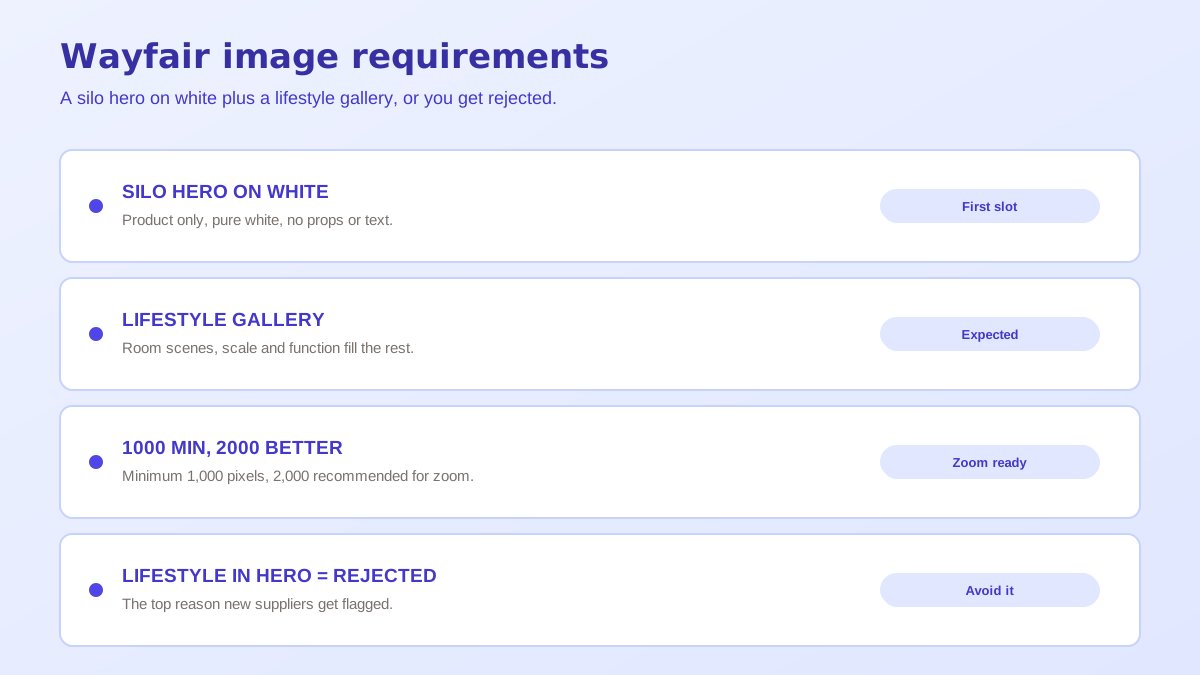
The hero image on Wayfair must be a silo shot: the product cleanly isolated on a pure white background with nothing else in the frame. Wayfair's own supplier education lists the "Single-Product Silhouette" as the first of its recommended imagery types, and reputable channel-management guidance specifies a pure white background at RGB 255, 255, 255 with the product filling the majority of the frame. What this rules out is what trips people up:
The logic is consistency. Wayfair renders thousands of thumbnails side by side in category and search grids, and a uniform white hero keeps that grid clean and comparable. According to Plytix's Wayfair best-practices guide, the framing convention is that the product should occupy at least 85 percent of the image, so avoid a tiny product floating in a sea of white. If your best marketing photo is a beautifully styled room, that photo belongs later in the gallery, not first.
| Spec | Wayfair |
|---|---|
| Hero image | Silo shot, pure white, no props |
| Gallery images | Mostly lifestyle, in-room, functional |
| Minimum resolution | 1,000 x 1,000 pixels |
| Recommended | 2,000 x 2,000 pixels for zoom |
| Product fill | About 85% of the frame |
Wayfair enforces a hard resolution floor before an image can go live. Per Wayfair's Imagery 101, images need to be at least 1,000 x 1,000 pixels to be featured, and Wayfair recommends 2,000 x 2,000 pixels so shoppers can zoom in to inspect detail. The practical spec looks like this:
Because the hero doubles as the zoom source, a 1,000 pixel file that technically passes can still look soft when a shopper enlarges it. Shooting or generating at 2,000 pixels and up gives you headroom and keeps the listing from looking low-budget next to established brands.
Wayfair expects the rest of your gallery to do the emotional selling that the silo hero cannot. Wayfair's guidance encourages suppliers to equip each product with multiple images and to vary shot types and angles, and it describes several distinct categories beyond the silhouette:
Channel-management guidance notes you can attach one main image plus up to nine secondary images, and a common recommendation is to aim for six or more images. For home goods, this is where you win or lose the sale: shoppers cannot touch the product, so environmental and functional shots answer the questions a title never can. This split is exactly why home sellers benefit from planning both a clean catalog shot and a set of styled scenes, a workflow we cover in our furniture product photography guide and our home decor product photography guide.
The hero is the trap: a styled lifestyle photo or a prop in the first slot is the single most common reason new Wayfair suppliers get rejected. The hero must be a clean silo on pure white; lifestyle belongs in the gallery.
Most Wayfair rejections trace back to a small number of avoidable image mistakes rather than product quality. The pattern is almost always the hero slot. Here are the failures that show up most often:
The fix is process, not luck. Treat the hero as a compliance asset with one job (clean isolation on white) and treat the gallery as your marketing canvas. Because Wayfair's silo-hero-plus-lifestyle-gallery split differs from other channels, do not assume a single set of files works everywhere. If you also sell on Walmart, review our Walmart Marketplace image requirements before reusing the same primary image, since each platform's hero rules and framing conventions differ in the details.
You can meet Wayfair image requirements without renting a photo studio for every SKU, but you do need two distinct outputs from your source material. The two-track approach:
This is where AI generation earns its place for home and furniture sellers. From a single clean product photo, an AI product photography tool can output a spec-compliant silo shot on pure white for the hero and a full set of styled room scenes for the gallery, keeping the product itself pixel-consistent across every frame. That consistency matters because Wayfair shoppers move fast between the thumbnail and the zoom, and a product that shifts shape or color between images erodes trust. Whether you photograph or generate, verify each hero against the checklist before uploading: pure white background, product filling the frame, no props, no text, and at least 1,000 x 1,000 pixels with 2,000 preferred. Getting the hero right on the first submission is the single biggest lever for passing Wayfair's review without a resubmission loop.
Generate a spec-compliant pure-white silo shot plus a full set of styled room scenes from a single product photo, no studio required. 50 free credits, no credit card.
Start free →Yes. The primary image should be a silo shot with the product isolated on a pure white background (RGB 255, 255, 255), with no props, lifestyle scene, text, or promotional overlays. This is the most strictly enforced part of Wayfair image requirements, and lifestyle photos belong in the gallery instead.
Images need to be at least 1,000 x 1,000 pixels to be featured on Wayfair. Wayfair recommends 2,000 x 2,000 pixels so buyers can zoom in to inspect finish, materials, and construction, which is especially important for furniture and home goods.
Channel guidance points to one main image plus up to nine secondary images, and a common recommendation is to aim for six or more images. Wayfair encourages varying shot types across silhouette, environmental, functional, and dimensional views.
Yes, and you should. Lifestyle and environmental photos are expected throughout the gallery to show scale, room context, materials, and function. The one place they are not allowed is the primary hero slot, which must remain a clean silo shot on white.
The most common causes are putting a lifestyle photo or props in the hero slot, using an off-white or gray background, adding text or logos to the primary image, or uploading a hero below the 1,000 x 1,000 pixel minimum. Fixing the hero to a clean, pure-white silo shot resolves most rejections.
Comments
No comments yet, be the first.
Leave a comment