
eBay Authenticity Guarantee: The Photo Standard That Decides Whether Your Item Gets Flagged
September 13, 2026 · 7 min read · by Aashirvad Kumar
September 13, 2026 · 7 min read · by Aashirvad Kumar
eBay's Authenticity Guarantee is an automatic program that routes eligible items in certain categories over a set price into physical inspection by a third-party expert before the buyer ever receives them. When a sneaker, handbag, watch, piece of jewelry, or trading card crosses its category threshold, eBay adds the listing to the program with no opt-in and no opt-out, and the item ships to an authentication center instead of straight to the buyer. That inspection is where the sale lives or dies, and the photos you upload before the sale are a big part of what the authenticator uses to match your listing against the physical item.
Most sellers assume authentication is purely about the object in hand, so they treat the listing gallery as a marketing afterthought. That is the mistake. Weak, low-resolution, or incomplete eBay Authenticity Guarantee photos create mismatches between what you described and what the inspector sees, and mismatches are exactly what trigger holds, failed passes, and returns. The same discipline that wins the click also protects the sale, which is why serious resellers now treat their product images as a ranking and trust signal rather than a formality. This guide covers which categories and thresholds are covered, exactly which shots authenticators lean on, and how thin photography quietly costs you money.
Key takeaways
eBay Authenticity Guarantee is a free inspection service where a qualifying sale is shipped to independent authenticators who verify the item before it continues to the buyer. According to eBay's official seller help page, eligible items are added to the program automatically with no opt-in or opt-out option. Once the item passes, it ships onward with a tamper-evident tag or verification card; if it fails, it goes back to the seller and the buyer is refunded. The seller does not choose to participate and does not pay for the mandatory tier, so the only lever you control before the sale is the quality of your listing, and that includes your photos.
Because the authenticator never spoke to you, your listing is the reference document they inspect against. If your gallery clearly shows the serial number, the stitching, the sole, or the card corners, the inspector can confirm quickly. If it does not, the item still gets inspected, but any discrepancy between your description and the physical piece becomes a reason to hold, question, or fail the pass.
| Category | Mandatory threshold |
|---|---|
| Sneakers | $100 and up |
| Apparel and streetwear | $200 and up |
| Trading cards | $200 and up |
| Handbags and accessories | $500 and up |
| Jewelry | $500 and up |
| Watches | $2,000 and up |
| Coins | $500 and up |
Authenticity Guarantee applies to specific categories only once an item meets that category's minimum price, and the thresholds differ widely. Based on eBay's published eligibility details, the covered categories and their price floors are:
Thresholds and eligible brands change over time, so confirm the current figure for your exact category on eBay before you list. The takeaway that does not change: the moment your price crosses the line, your photos are no longer just marketing, they are evidence.
Authenticators verify identity markers, so the photos that matter most are the ones showing serial numbers, date codes, labels, and construction details unique to the item. eBay's own guidance for pre-owned watches, for example, tells sellers to include photos of any marks on the case, dial, bezel, crystal, bracelet, clasp, and crown, plus the serial number. The pattern holds across categories: inspectors look at the small, hard-to-fake details, and your eBay Authenticity Guarantee photos should put those front and center.
Practical shot lists by category:
Every one of these is a macro shot. A single hero image at a flattering distance does not let an inspector read a five-digit serial or a font on a stamp, and that gap is where problems start.
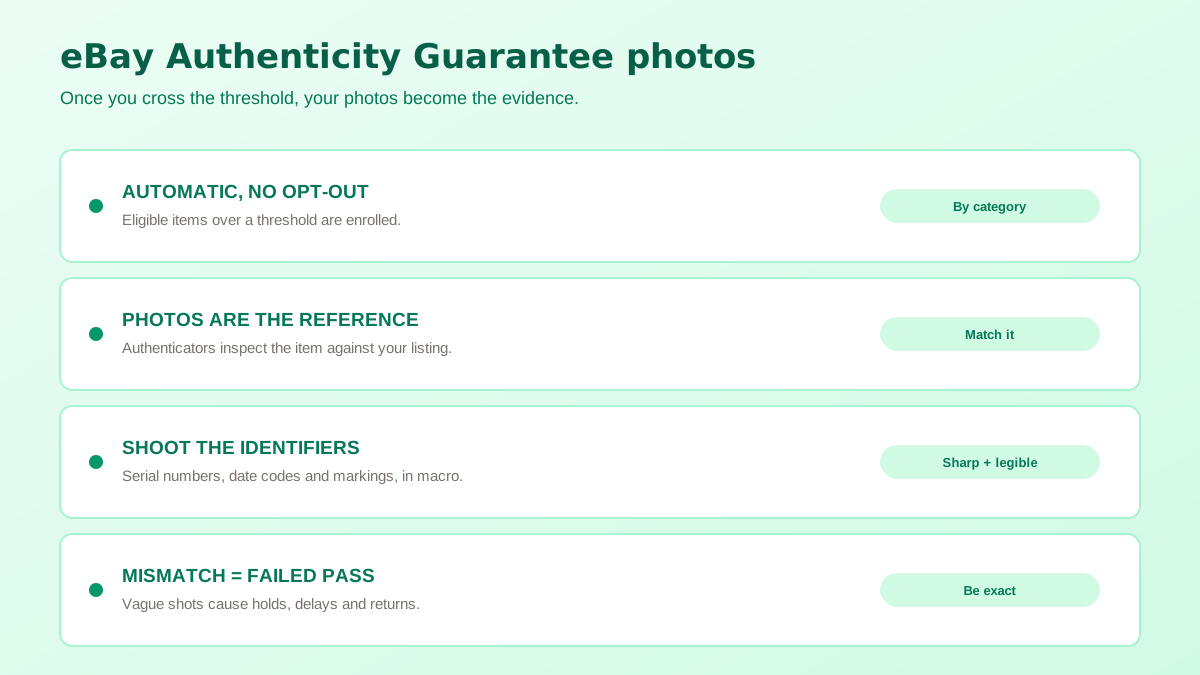
Your photos are evidence: once the price crosses the category threshold, the authenticator inspects the physical item against your listing, so a blurry serial-number or date-code shot becomes a reason to hold, question, or fail the pass.
Poor photography rarely causes an outright rejection on its own, but it consistently creates the mismatches that lead to holds, questions, and returns. The failure mode is a gap between what your listing claims and what the inspector physically confirms. If your description says "no flaws" but the item arrives with a scuff the photos never showed, or your date-code shot is too blurry to match, the authenticator has to reconcile a discrepancy instead of confirming a match. Reseller guidance consistently points to inconsistent condition grading, undocumented aftermarket or replaced components, and vague wear disclosure as the recurring triggers behind disputed authentications.
There is also a speed cost. Clear photos let an inspector confirm and release the item fast. Ambiguous ones invite a closer, slower look, and in a program where the buyer is already waiting through an extra shipping leg, added days raise the odds of a cancellation or a negative experience. In other words, thin eBay Authenticity Guarantee photos do not just risk a failed pass, they lengthen the whole transaction and erode buyer patience.
The fix is a repeatable pre-listing photo routine that maps every condition claim to a visible image. Before you publish, make sure each authentication marker has its own sharp, well-lit frame and that anything you say in text is provable in a picture. A workable checklist:
Consistent lighting and clean, uncluttered backgrounds also make identifiers easier to read, which is where AI product photography earns its place: it standardizes exposure and background across a whole catalog so the detail shots stay legible listing after listing. The same disciplined approach to product photography that lifts conversion on the main gallery is what keeps the authentication shots trustworthy. And if you also lean on eBay's automated listing tools, remember they fill in the words, not the evidence, which is why our note on how eBay's photo-to-listing AI handles item specifics matters here too: the AI can describe the item, but only your macro photos can prove it.
Standardize exposure and background across your catalog so serial numbers, date codes and markings stay sharp and legible on every listing. 50 free credits, no credit card.
Start free →No. eBay states that eligible items are added to the program automatically with no opt-in or opt-out option. Once your item meets its category price threshold, the sale routes through inspection whether or not you asked for it.
Coverage kicks in by category and price, roughly: sneakers from $100, apparel and trading cards from $200, and handbags, jewelry, and coins from $500, while watches are mandatory from $2,000 with an optional paid service below that. Thresholds and eligible brands change, so verify the current figure for your category on eBay before listing.
They affect it indirectly but meaningfully. Authenticators inspect the physical item against your listing, so clear photos of serial numbers, date codes, and condition help them confirm a match quickly, while blurry or missing detail shots create discrepancies that slow the process or lead to a failed pass and return.
For handbags, capture the date code or authenticity stamp, interior tags, hardware engravings, stitching, and base corners. For watches, eBay advises photographing marks on the case, dial, bezel, crystal, bracelet, clasp, and crown, plus the serial number and any box or papers.
If the authenticator cannot confirm the item as genuine or it does not match your listing, the item is not sent to the buyer. The buyer is refunded and the item is returned to you, which is why accurate photos and condition disclosure up front are the cheapest insurance against a failed sale.
Comments
No comments yet, be the first.
Leave a comment