
Amazon Product Photography for Furniture: Win the Click, Cut Returns, Skip the Studio
July 4, 2026 · 9 min read · by Aashirvad Kumar
Your credits refresh every month for as long as ListingRVA AI exists. No renewals, no annual increases, nothing to cancel.
Available on select plans. No renewals, ever.
July 4, 2026 · 9 min read · by Aashirvad Kumar
A shopper scrolling Amazon for a sofa cannot sit on it, cannot measure it against their wall, and cannot feel the fabric. They decide from a grid of thumbnails in about a second. That makes the photos the entire showroom, and furniture the hardest category on the marketplace to get right. The pieces are bulky and expensive to move to a studio, the main image has strict rules, and the single biggest reason furniture comes back is that it did not look the size the buyer expected. This is one category view of our wider Amazon product photography services.
Amazon product photography for furniture is where those three problems get solved at once. Instead of crating a sofa to a set, you photograph the piece once and generate the full compliant image set, a pure white hero, scaled room scenes, material close-ups and A+ modules, with a tool that preserves your real upholstery and grain. It is AI product photography tuned for the category that is hardest to shoot and easiest to get wrong.
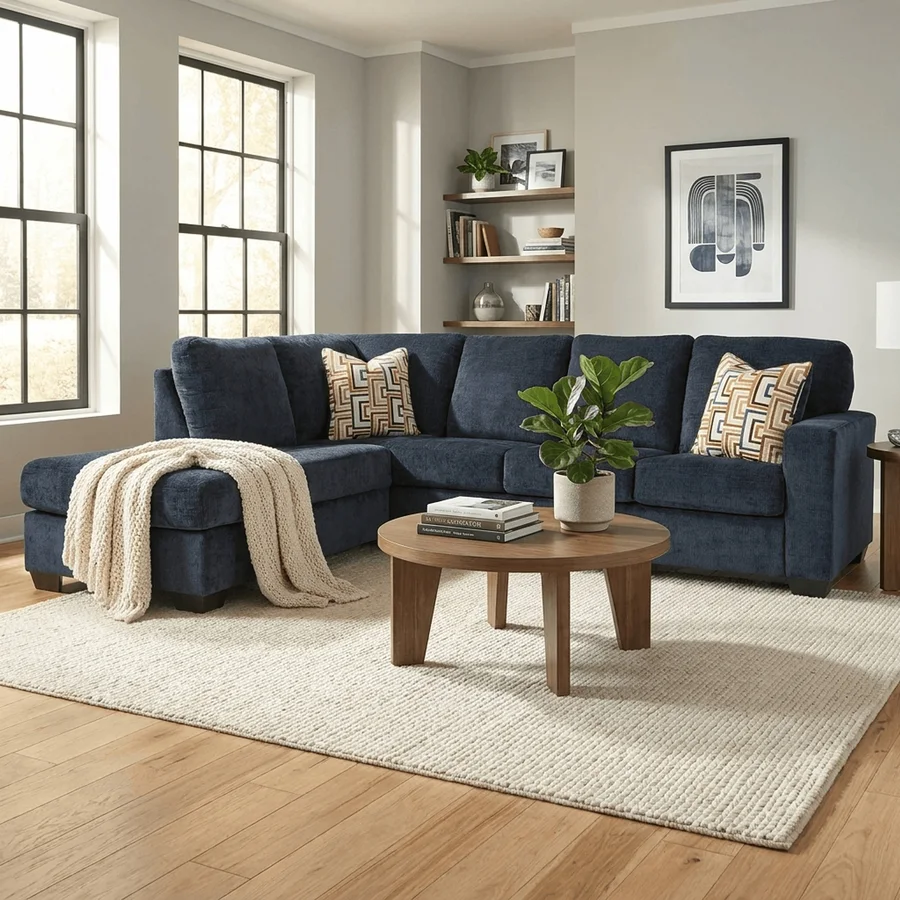
Every category rewards good images, but furniture punishes bad ones. A phone case looks the same in a customer's hand as it does in the listing. A sectional does not. Scale, proportion, fabric weight and the way a piece sits in a real room all matter, and none of them come through in a flat packshot on a seamless sweep. Buyers know this, so they hesitate, and hesitation on a high-ticket item means a lost sale.
Then there is the logistics tax. Booking a studio, hauling a heavy piece there, staging a room, hiring a stylist and a photographer, and doing it again for every finish, runs into hundreds or thousands of dollars per SKU. For a catalog of forty pieces in six colorways, traditional photography is a five-figure line item before a single unit sells. That cost is exactly why so many furniture listings ship with two dim, poorly lit photos, and exactly why the ones with a full, clean image set win the click.
The Amazon main image is not a creative decision, it is a compliance checkbox, and furniture sellers trip over it constantly because their best-looking shot is a styled room scene that the main-image rule forbids. The main image must be:
The trap is that a bare white-background shot of a sofa, while compliant, is also the least persuasive image you own. The fix is not to break the rule, it is to lead with a clean, compliant hero and then let the secondary slots and A+ do the selling. Generating a true white background from a normal product photo is a one-click job with the free background remover, and you can sanity-check the whole listing against policy with the listing quality checker before you publish.
Amazon gives you up to seven gallery slots plus A+ real estate below the fold. A furniture listing that converts uses every one with a purpose, not seven angles of the same empty packshot. The set that works:
With amazon product photography for furniture done through AI, all seven come from one source photo in minutes, and they stay visually consistent because they share the same lighting and styling. For the deeper how-to on the room-scene and colorway styles, the furniture product photography guide and the home decor photography guide go style by style.
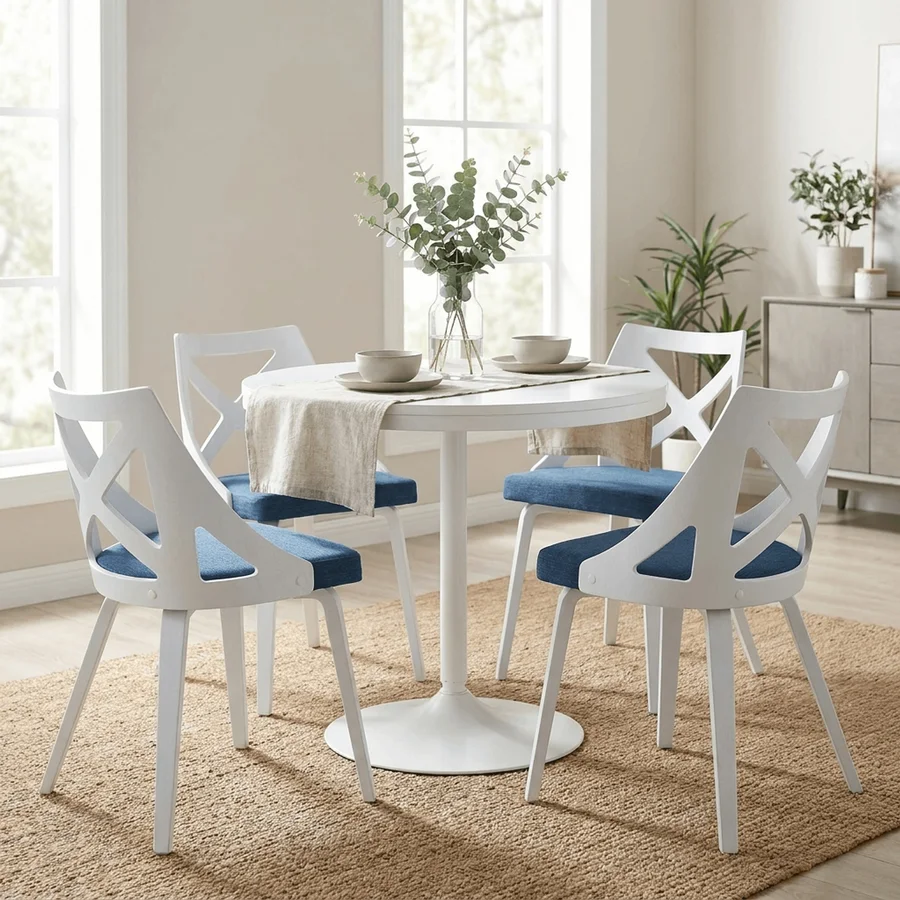
Ask any furniture seller what drives returns and the answer is the same: it was bigger, or smaller, than the customer pictured. A return on a sofa is not a restocking fee, it is freight both ways on a heavy item, and it can erase the margin on the next three sales. Images are the cheapest place to prevent it.
Three moves do most of the work. Put the piece in a room scene against familiar references, a standard rug, a doorway, a coffee table, so the eye calibrates size instantly. Add a dimension graphic with the real numbers on it. And keep the measurements in the title and bullets, not just buried in the details. When the buyer can judge scale before they click buy, the piece that arrives matches the one they imagined, and it stays.
The seven gallery images get the click. A+ Content wins the comparison. For furniture, the A+ modules below the fold are where you show the piece in three different rooms, zoom into the joinery and the stitching, lay out the full colorway range, and put your build quality next to the cheap import the shopper is also considering. Premium A+ opened to all Brand Registry sellers, so this real estate is no longer reserved for big brands.
Every one of those modules is imagery you can generate from the same source photo, then fill with copy and alt text that is actually indexed. The A+ content generator builds the module set, and a keyword-true title ties the listing together. This is the layer where a small furniture brand can out-present a much larger competitor for the price of a few credits.
Here is the math that makes this an easy call. A staged furniture shoot with a set, stylist and photographer commonly runs several hundred dollars per SKU, and more once you factor moving bulky pieces and reshooting colorways. The same seven-image Amazon set through AI furniture product photography lands at a few dollars per SKU and minutes per product. A new finish does not need a reshoot, it needs one more generation.
Multiply across a catalog and the difference is not a discount, it is a different business. Brands that were rationing photography to their bestsellers can now give every SKU a full, compliant, persuasive image set, which is exactly what Amazon's algorithm and its shoppers both reward. The finished images publish straight to Amazon and your other channels through the marketplace integrations, and the same source photo also drives your SEO listing copy, so a new piece goes from one photo to a live, ranked listing in one sitting. See pricing for the per-credit cost.
50 free credits, no credit card. Compliant white-background heroes, room scenes, dimension and A+ styles included.
Start free →Yes. The AI reads your real product photo first and preserves the exact shape, upholstery, wood grain, color and finish, then places the piece on a pure white background or in a styled room scene. Your real piece stays the hero, never a generic look-alike, so the Amazon listing matches what ships.
The main image must be the product on a pure white background (RGB 255,255,255), fill about 85 percent of the frame, show the real product photographically with no props, text, logos or watermarks, and be at least 1000 pixels on the longest side so zoom works. Room scenes, dimensions and detail belong in the secondary slots and A+ modules.
Wrong-size expectations are the top furniture return reason. Pair the white-background hero with a scaled room scene that sets the piece against familiar references like a rug, sofa or doorway, add a dimension graphic, and put exact measurements in the copy. When buyers can judge scale before buying, returns fall.
A staged furniture shoot with a set, stylist and photographer runs into the hundreds or thousands per SKU because the pieces are bulky and hard to move. AI brings the same image set to a few dollars per SKU and minutes per product, and new colorways or room scenes generate on demand without a reshoot.
Yes. From one photo you can generate the room scenes, material close-ups, dimension callouts and comparison layouts that fill A+ modules, then write the module copy and alt text. A+ is where furniture brands prove scale, quality and range beyond the seven main gallery slots.
ListingRVA AI now works inside Claude. Connect your workspace and ask Claude to generate listing copy and publish product images to your store, without leaving your editor. See the Claude connector →
Comments
No comments yet, be the first.
Leave a comment