
What Target Plus Actually Requires From Your Images Before You Get Invited
September 14, 2026 · 7 min read · by Aashirvad Kumar
September 14, 2026 · 7 min read · by Aashirvad Kumar
Target Plus is not a marketplace you sign up for. It is an invite-only, curated third-party marketplace where Target hand-picks brands, and one of the fastest ways to lose that invitation before you ever get it is a catalog that cannot pass image and data validation. Sellers who arrive with clean white-background photography, GS1-registered barcodes, and a feed that maps cleanly to Target's attributes tend to onboard smoothly. Sellers who treat it like an open storefront tend to stall.
The confusion is understandable, because Target Plus rarely publishes its rules in one tidy place, so most brands learn the standards through an integration partner after they have already been approved. This guide pulls the verified pieces together: the target plus seller image requirements, how the invite-only model actually works, and how to prepare a compliant catalog before you apply. If you have optimized listings for Amazon or Walmart, some of this will feel familiar, but the enforcement and the entry path are different enough to plan for separately. Getting your visuals right early matters, which is why polished AI product photography is worth sorting out before an invitation, not after.
Key takeaways
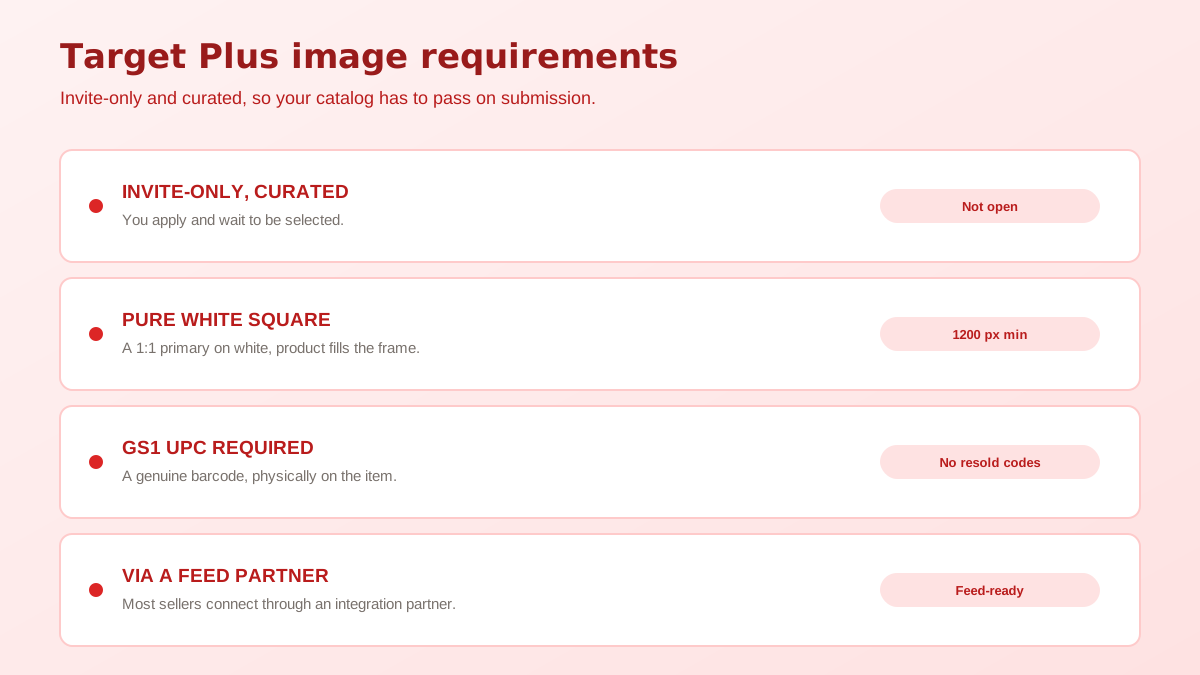
Target Plus is a curated, invite-only marketplace, which means you apply and wait to be selected rather than opening a seller account on demand. Target vets brands to protect its own reputation and customer experience, so it evaluates whether your assortment fills a genuine gap in its catalog and whether your operations can meet its standards. According to guidance from integration partner Feedonomics, the platform is explicitly described as curated and not an open marketplace.
Before you apply, it helps to have the basics in place so an invitation can convert into a live catalog quickly. Commonly cited entry requirements include:
| Spec | Target Plus |
|---|---|
| Background | Pure white |
| Aspect ratio | Square 1:1, product fills frame |
| Minimum resolution | 1,200 x 1,200 pixels |
| Preferred | 2,400 x 2,400 pixels |
| Format and color | JPG preferred, RGB |
| Identifier | GS1-registered UPC or EAN |
The target plus seller image requirements center on a clean, catalog-grade primary image that looks consistent next to Target's own product photography. The main image should sit on a pure white background, be square with a 1:1 aspect ratio, and let the product fill the frame evenly. Per specifications documented by Feedonomics, the practical standards look like this:
These standards are close in spirit to other retailers but not identical, so do not assume an Amazon-ready file automatically clears Target. If you are cross-listing, it is worth reviewing our separate breakdowns of Amazon product image requirements and Walmart Marketplace image requirements so you can prepare each set correctly rather than reusing one file everywhere.
Only one image is technically required to launch a product, but Target Plus strongly prefers a richer gallery, and thin imagery is a common reason listings underperform. Most guidance recommends at least three images per product, with room for several more secondary shots supplied as alternate image URLs. A strong gallery typically includes:
Secondary images generally follow the same quality bar as the primary, though lifestyle and context shots have more creative latitude than the strict white-background hero. Because product imagery increasingly drives both conversion and discovery, it is worth treating the full set as a ranking asset, a theme we cover in our piece on how AI shopping product images are becoming a ranking signal.
Data and image are one submission: a perfect white-background photo attached to a mismatched or invalid UPC still fails validation, so treat the barcode, SKU and attributes as part of the same asset as the image.
Every Target Plus product needs a GS1-registered UPC or EAN, and that barcode must be genuine, not a recycled or resold code. Multiple integration partners note that the barcode should be sourced from GS1 and be physically present on the product itself, which rules out the cheap secondhand UPCs that some sellers use elsewhere. Guidance summarized by Feedonomics emphasizes a few catalog fundamentals:
Image compliance and data compliance are linked here. A perfect white-background photo attached to a mismatched or invalid UPC will still fail validation, so treat the barcode, SKU, and attributes as part of the same submission rather than an afterthought. In practice, meeting the target plus seller image requirements only counts if the data behind each image is just as clean.
Target Plus is built around approved integration partners, so most sellers connect their feed, inventory, and orders through a partner rather than uploading listings one by one. These partners manage product feeds, pricing, and inventory syncing, and often handle order and shipment data through EDI-style integrations. That structure shapes how you should prepare your catalog before applying, because your images and attributes need to flow cleanly through a feed:
The takeaway is that Target Plus rewards preparation. If your catalog, imagery, and barcodes are validation-ready and structured for a feed before you apply, an invitation turns into a live storefront quickly. If they are not, you spend the onboarding window fixing files instead of selling.
Produce clean, square, white-background primaries at the right resolution so your images pass Target Plus review the first time. 50 free credits, no credit card.
Start free →Yes. Target Plus is a curated, invite-only marketplace, so you apply and wait to be selected rather than opening a seller account instantly. Target evaluates whether your assortment fills a catalog gap and whether your operations, data, and imagery meet its standards before extending an invitation.
Guidance from integration partners points to at least 1,200 x 1,200 pixels, with roughly 2,400 x 2,400 preferred and about 6,000 x 6,000 as a practical ceiling. The primary image should be square, sit on a pure white background, fill the frame, and be saved in RGB, ideally as a JPG.
Yes. Each product needs a GS1-registered UPC or EAN, and it should be physically present on the item. Resold or recycled barcodes are discouraged, and every product also needs a unique SKU so the catalog stays clean and free of duplicates.
Most sellers connect through one of Target's approved integration partners, which manage product feeds, inventory, and orders rather than requiring manual uploads. Preparing your images, attributes, and SKUs to flow through a feed before you apply makes the onboarding step far faster.
Only one image is required to launch, but at least three is preferred, with room for several more secondary shots. A strong gallery pairs the compliant white-background hero with additional angles, scale or in-use context, and close-up detail shots that answer common shopper questions.
Comments
No comments yet, be the first.
Leave a comment