
Amazon Relist or Edit Listing: Does Editing Reset Your Sales History?
August 15, 2026 · 8 min read · by Aashirvad Kumar
Your credits refresh every month for as long as ListingRVA AI exists. No renewals, no annual increases, nothing to cancel.
Available on select plans. No renewals, ever.
August 15, 2026 · 8 min read · by Aashirvad Kumar
You have a listing that is not working. The title was written in a hurry two years ago, the images are the ones the supplier sent, and the bullets read like a specification sheet. You know what a better version looks like. What stops you is a rumour you have heard in every seller group: that editing a listing resets it, throws away the ranking you have built, and drops you back to the bottom. So the Amazon relist or edit listing question turns into paralysis, and the underperforming listing stays exactly as it is.
The rumour is a distorted version of something true. Editing does change something, and after a significant edit the listing can move around for a few days in a way that feels alarming. But nothing is reset, nothing is deleted, and the alternative people reach for instead, building a fresh ASIN, throws away far more than any edit could.
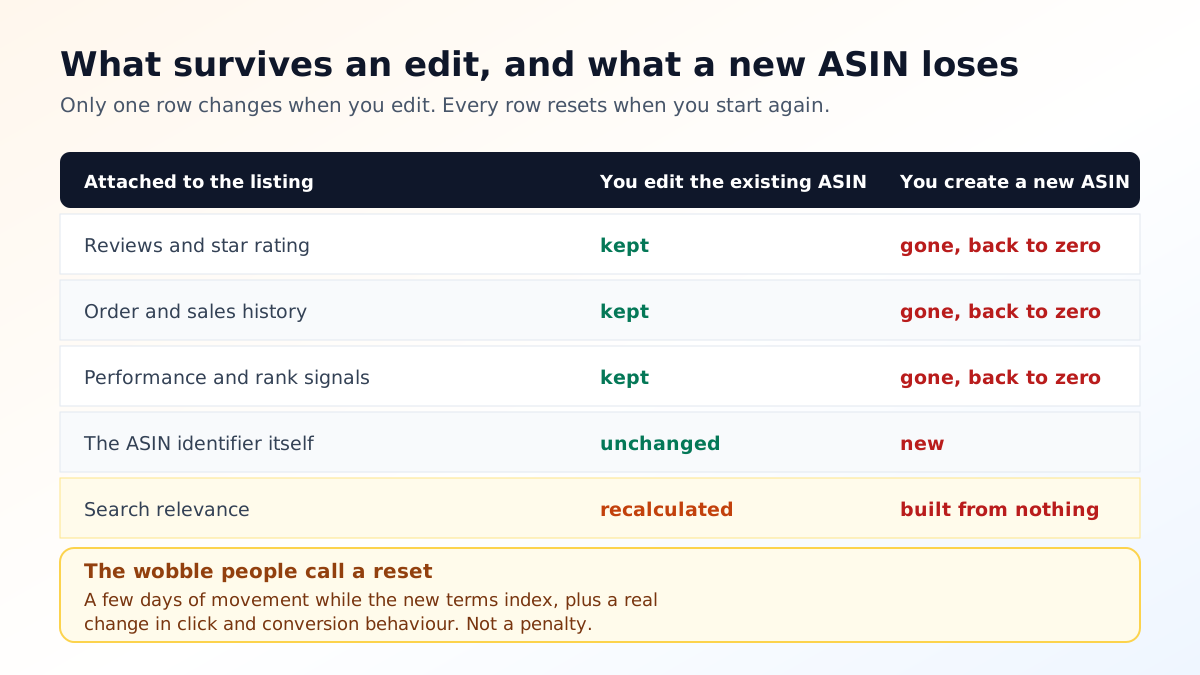
An ASIN carries several distinct things: the catalogue record with its attributes, the review set, the order and sales history, and the performance signals derived from that history. An edit to a text field touches the first of those and nothing else. Change the title and the reviews stay, the units sold stay, the sessions and conversion history stay, and the ASIN identifier itself is unchanged, which is the thing every other signal is attached to.
What does change is relevance. Search relevance is computed from your text, so replacing that text means the listing has to be assessed again against a new set of terms. Terms you dropped stop being matched, terms you added start being matched, and for a short period the results can look unstable because you are effectively competing on a different keyword set than you were last week. That is a re-indexing effect, not a penalty.
The second real change is behavioural, and it is the one people mistake for punishment. A new title, a new main image or a new price attracts a different click through rate and converts differently, so the listing's performance genuinely changes. If the edit was an improvement, the number goes up after the wobble. If it was not, it goes down and stays down, which is information rather than a reset.
The Amazon relist or edit listing decision looks balanced until you write down what starting again actually forfeits. A new ASIN has no reviews and no rating, and review count is one of the strongest purchase signals on the platform. It has no sales history, so nothing in the system knows the product sells. Rebuilding those from zero on an established category is measured in months, not weeks, and no amount of good copy shortens it. Working out which fields are actually short on the existing listing is the cheaper first move, and a listing quality checker tool will tell you that in a minute.
There is also a compounding problem people forget. If your old listing stays live while the new one launches, they compete against each other for the same queries, split the sales velocity that would have ranked either of them, and confuse anyone who finds both. If the old one is closed instead, you lose whatever traffic it still had while the new one has none. Neither branch is comfortable, which is a good sign the fork was avoidable.
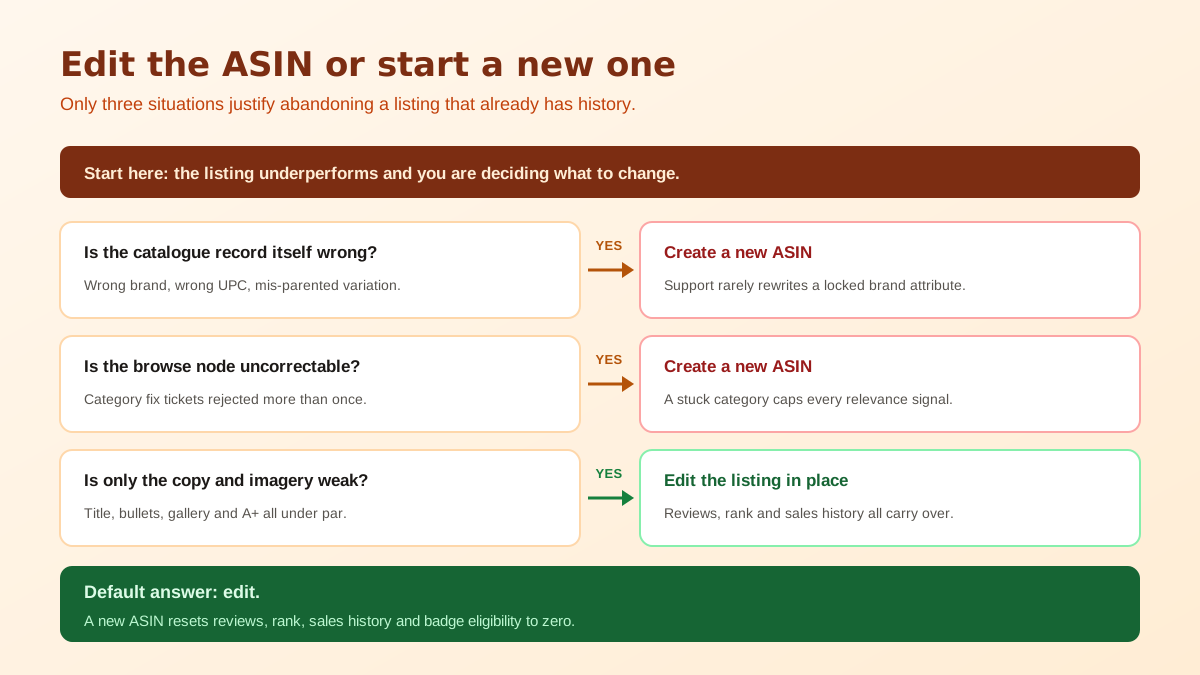
None of this is an argument that a new ASIN is never right. It is an argument that it should be a decision made because the existing record is wrong, not because the copy is weak. Weak copy is the one problem an edit solves completely.
There are four situations where the existing record is the problem. The first is when the ASIN describes a genuinely different product, usually because a variation was reused for a replacement item that is not really the same thing. The reviews attached to it are then describing something the buyer will not receive, which is a customer experience issue before it is a strategy issue.
The second is a category assignment that cannot be corrected. Category drives which best seller rank you appear in and which comparison sets you land in, and while most category errors can be fixed through a case, some records resist it. The third is a variation family that has become structurally tangled, with children under the wrong parent and attributes that no longer apply. The fourth is a listing carrying an enforcement history that follows the ASIN rather than the account.
Notice that none of these is about the words. If your reason for wanting a fresh start is that the title is bad, the images are dull or the bullets are unclear, the fix is an edit, and rewriting the title against how shoppers actually search is exactly the job a good Amazon title generator tool does in a few minutes rather than an afternoon.
It is also worth separating the words people use. Relisting sometimes means creating a new ASIN, and sometimes it means reopening a listing you closed. Those are wildly different operations. Closing an offer leaves the record intact, so reopening restores the same ASIN with its history. Deleting the offer is the version that causes trouble, because rebuilding afterwards is slower and easier to get wrong. If you are pausing rather than exiting, close rather than delete.
Most of the horror stories come from editing everything at once. A seller changes the title, all five bullets, the description, the backend terms, the main image and the price in a single afternoon, then watches the listing behave strangely for a week and concludes that editing is dangerous. What actually happened is that six variables changed together, so the effect of each is unknowable and any recovery is unattributable.
Sequence it instead. Backend terms first, because they are invisible to shoppers and therefore change relevance without changing behaviour, which lets you see the indexing effect in isolation. Then the title. Then images. Then bullets and description. Leave enough time between each to gather a comparable number of sessions, and record the unit session percentage before every change so you have something to compare against.
Watch for edits that do not stick, because that is a different problem wearing the same costume. Fields that revert after a few hours usually mean another contributor to the catalogue record is overwriting you, or that a flat file and the web form are fighting. This is common on records where multiple sellers contribute, and it looks exactly like Amazon rejecting your change when it is actually somebody else winning it.
Also check that new backend terms are being picked up at all, because an edit that never indexed is indistinguishable from an edit that did not work. Searching for an exact uncommon phrase from your own copy alongside the ASIN is the crude version of that test, and the reasons terms fail to register are covered in the walkthrough on backend keywords not indexing.
Indexing normally catches up within a day or two of an edit, which is why checking after an hour and panicking is so common and so pointless. Ranking effects follow the sales that follow the new relevance, so they take longer, and on a low volume ASIN the honest answer is two to three weeks before the numbers mean anything at all.
The temptation in week one is to revert. Resist it unless something is clearly broken, such as a suppressed listing or a title that truncates into nonsense on mobile. A change reverted before it had volume behind it teaches you nothing and costs you the same disruption twice, which is the most expensive way to run out of patience.
If you accept that editing is safe, the Amazon relist or edit listing question stops being about risk and becomes about priority: which field, in which order, for which listing. The answer is almost always the images before the words, because the main image has to earn the click before any text is read, and the gallery carries more of the decision than the bullets do. Generating the scale, in context and detail shots that a two year old supplier photo set never included is where AI product photography removes the practical excuse for leaving a weak listing alone.
After that it is the title, then the first two bullets, then everything else, applied to your worst performing listings first rather than to the ones you happen to be thinking about. That prioritisation, rather than any single rewrite, is what turns a catalogue of tired listings into a working one, and the full sequence is laid out in the Amazon listing optimization playbook.
No. Editing changes the text that relevance is calculated from, so the listing has to be indexed again against its new terms, but the sales history, the reviews and the performance signals attached to the ASIN are untouched. What people experience as a reset is a few days of movement while the new keywords settle, not a return to zero.
Reviews are attached to the ASIN, so ordinary edits to the title, bullets, description, images or backend terms leave them exactly where they are. The operations that can move reviews are structural: splitting or merging a variation family, or changing which parent a child sits under. Those deserve far more caution than any copy change.
Closing removes your offer while leaving the listing record in place, so reopening it later restores the same ASIN with its history intact. Deleting removes your offer entirely and is the version people regret, because rebuilding afterwards is slower and more error prone. If you are pausing rather than exiting, close.
When the existing record describes a genuinely different product, when it sits in a category that cannot be corrected, or when the reviews attached to it belong to something you no longer sell. In those cases the history is not an asset, it is a liability, and carrying it forward misleads buyers.
Long enough to collect a comparable number of sessions, which on a slow moving ASIN can be two or three weeks. Indexing usually catches up within a day or two, but conversion and ranking effects need volume before they mean anything. Judging an edit after forty eight hours is how good changes get reverted.
There is no published limit, but there is a practical one. Every edit resets your measurement window, so changing something weekly means never knowing what worked. Batch related changes, leave them alone long enough to read, and keep a dated log of what you changed and what the numbers were beforehand.
ListingRVA AI now works inside Claude. Connect your workspace and ask Claude to generate listing copy and publish product images to your store, without leaving your editor. See the Claude connector →
Comments
No comments yet, be the first.
Leave a comment